

A concise guide to the legal routes, documents and official resources international couples should check before planning a civil or symbolic wedding in Marbella.
Yes, but the process depends on nationality, residence, marital status and the type of ceremony.
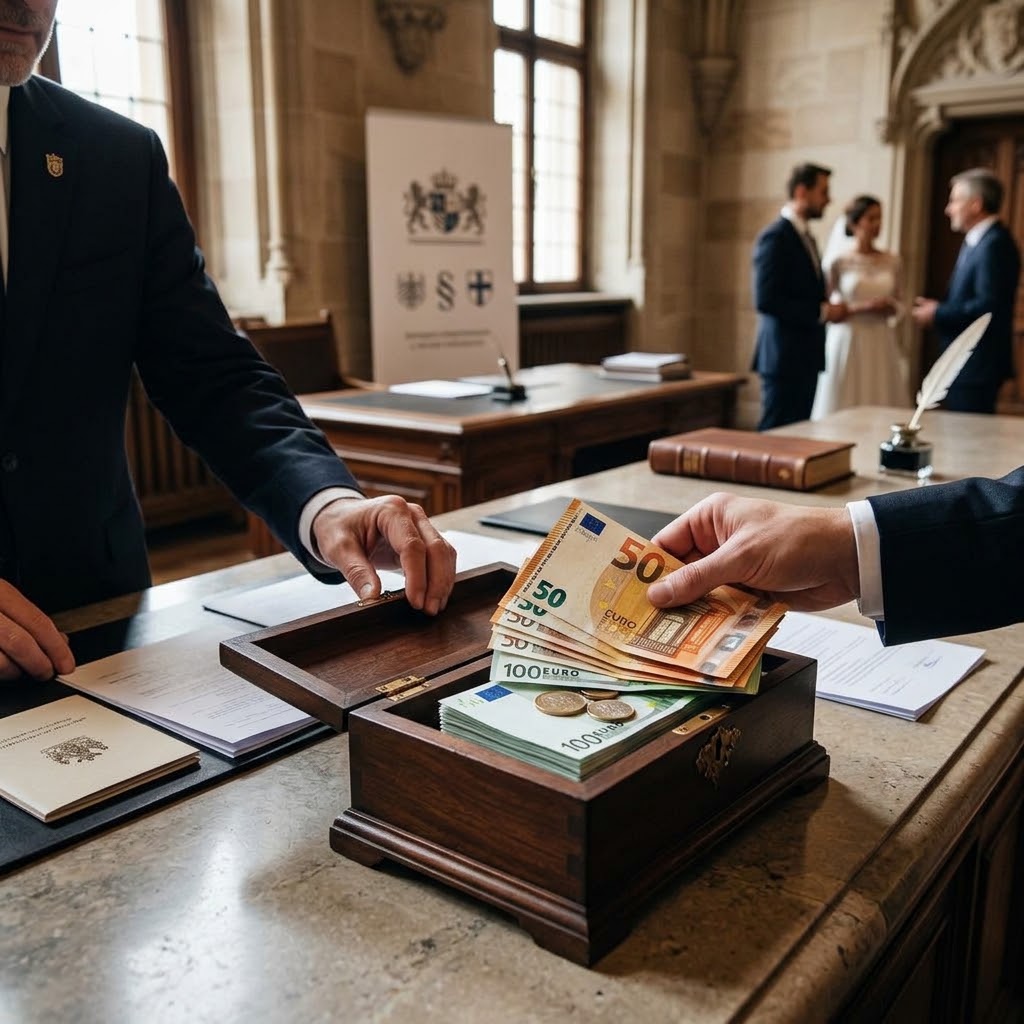
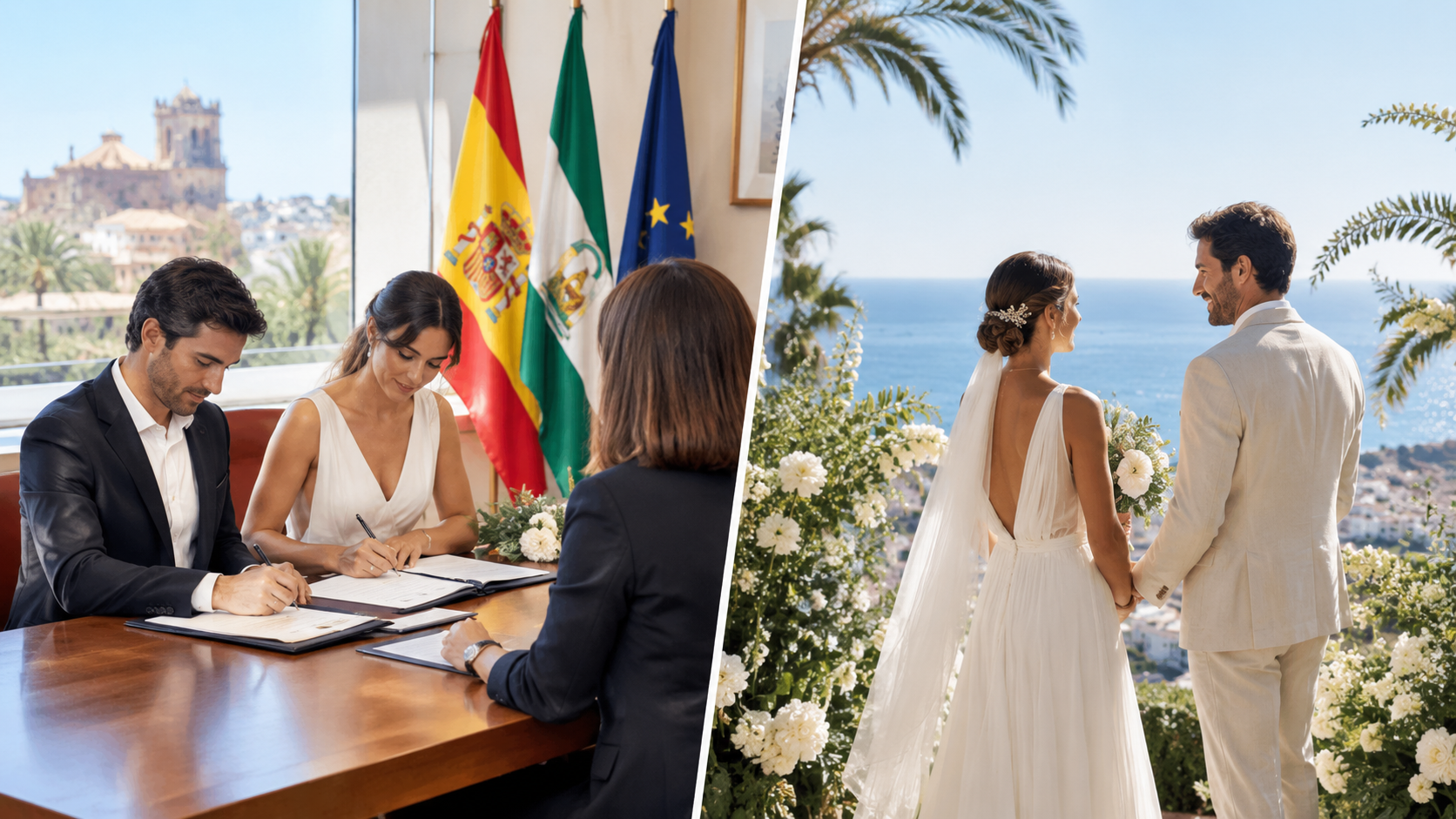
For a civil marriage celebrated through Marbella Town Hall, the underlying marriage file must first be authorised through the appropriate Registro Civil or notary connected to the place where one of the couple is registered as resident (empadronado).
For many destination couples who do not live in Spain, the simpler route can be to complete the legal marriage elsewhere and hold the ceremony and celebration they actually want in Marbella.
Before paying legal or ceremony deposits, establish:
Those six answers determine which authority and document route matters.
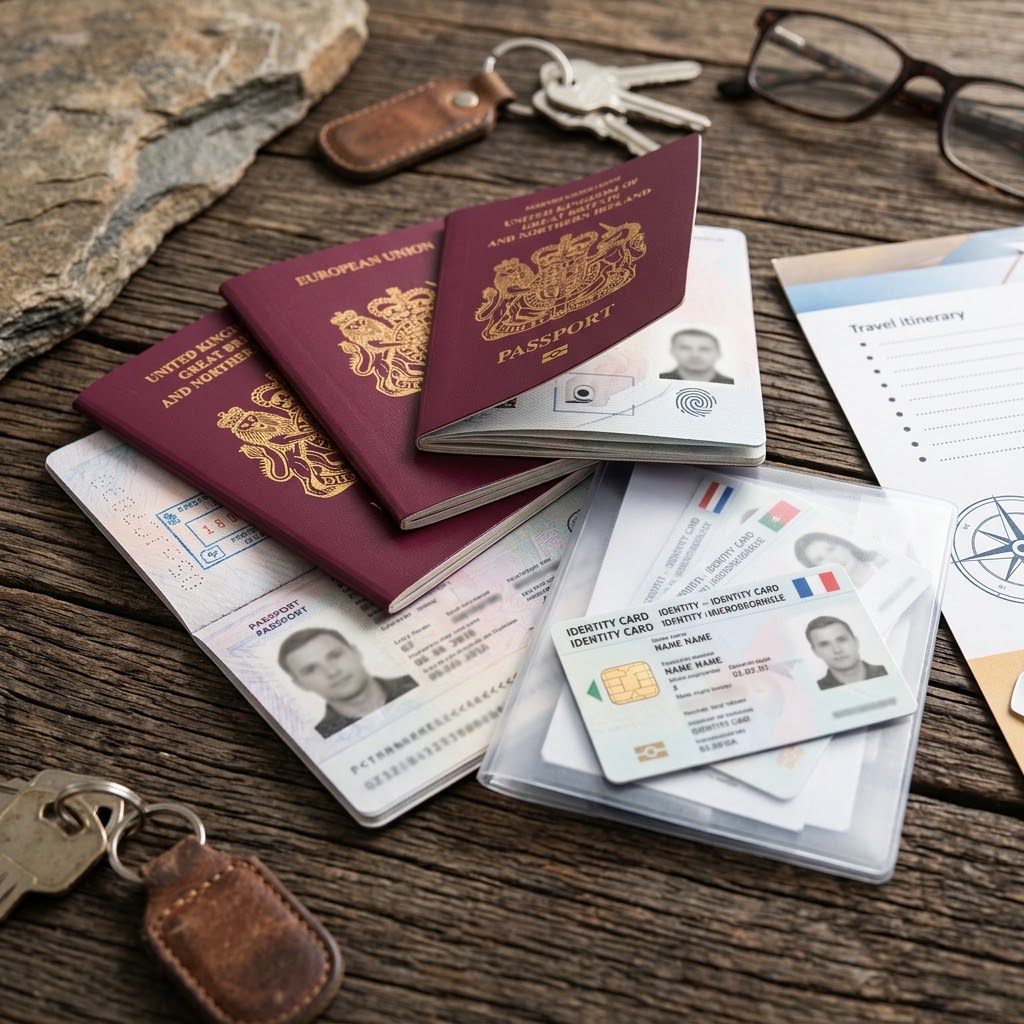
The precise list varies, but foreign couples may be asked for:
Foreign documents may need a Hague Apostille or other legalisation, depending on where they were issued, and official Spanish translations may also be required.
Do not order, apostille or translate an entire document bundle until the authority handling your case confirms exactly what it requires and how recent each document must be.
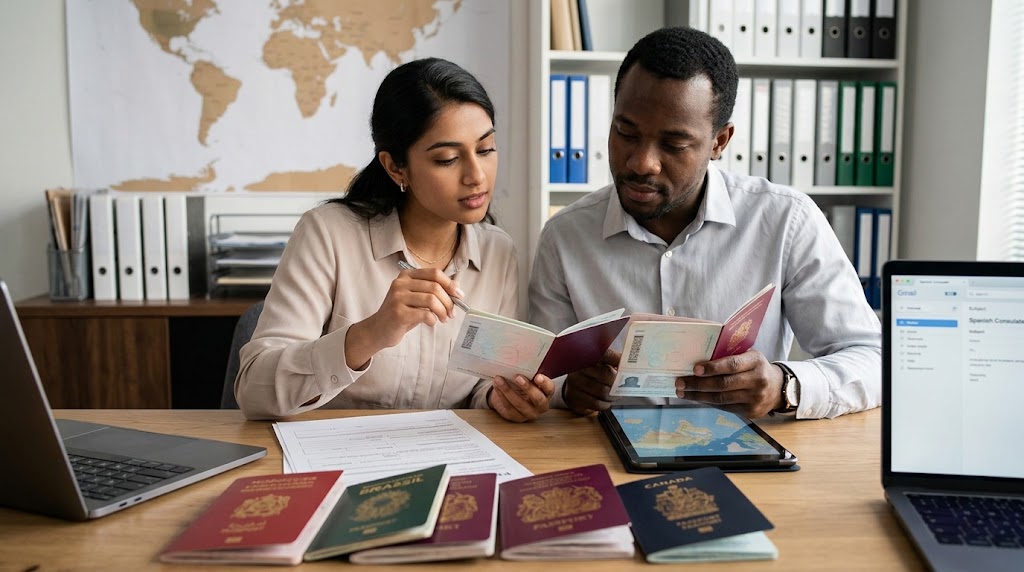
British nationality does not automatically mean two UK residents can arrive as tourists and book a Marbella municipal civil wedding. Residence and the chosen legal route matter. Many destination couples therefore compare a Spanish legal marriage with completing the legal formalities at home and holding a symbolic ceremony in Marbella.
EU citizenship does not create one universal marriage process. EU public documents can benefit from simplified rules under applicable EU legislation, including exemptions from some legalisation requirements, but residence and the specific authority still matter.
Non-EU couples should pay particular attention to Apostille/legalisation, official Spanish translations and the exact civil-status evidence required for their country. Advice written for an American couple should not automatically be applied to a Canadian or Australian couple.
A Spanish citizen marrying a foreign national may use the Spanish civil-registration system, but the foreign partner will normally need appropriate identity, birth and civil-status documentation. Start with the relevant Registro Civil/notary or Spanish consulate rather than a generic destination-wedding checklist.
If either partner has previously been married, expect additional documentation such as the previous marriage certificate, final divorce documentation or a death certificate. Legalisation and translation requirements may also apply.
Best rule: check the Spanish consulate responsible for your country and place of residence, and confirm the requirements of the authority actually processing the marriage file.
Marbella Town Hall currently states that couples wishing to celebrate a civil marriage through the Ayuntamiento must first process and obtain authorisation of the marriage application through the appropriate Registro Civil or notary.
Once authorised, the Town Hall requires the marriage authorisation together with identification for the couple and two adult witnesses.
Do not confuse this municipal legal process with simply hiring a Marbella wedding venue and arranging a ceremony there.
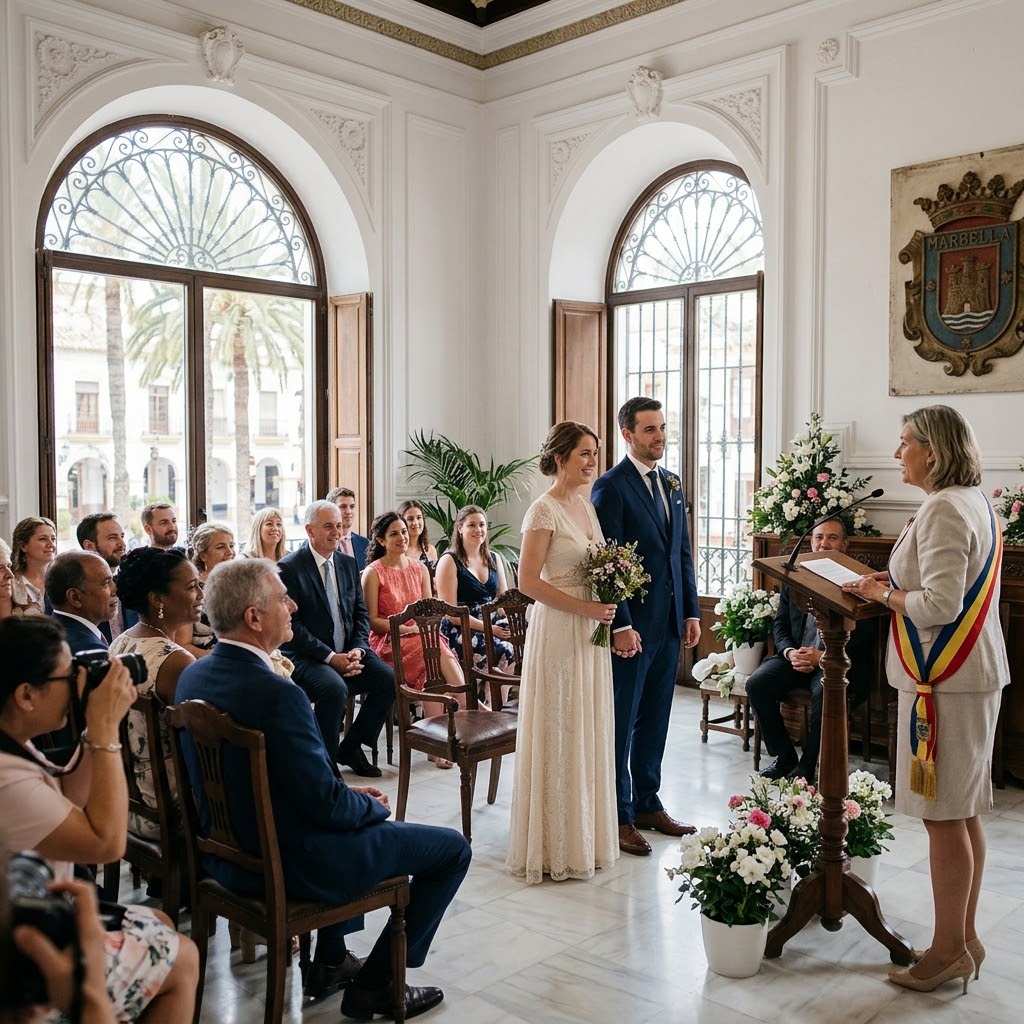
For some destination couples, the cleanest solution is to complete the legal marriage in their home country or another appropriate jurisdiction and then hold the ceremony they actually want in Marbella.
The Marbella ceremony can still include the aisle, vows, rings, readings, music, celebrant, guests, dinner, speeches and party. From a guest’s perspective, it can still be the wedding.
The only difference is that the legal signature happened separately.
For couples with complicated international circumstances, that can remove a substantial amount of administration from the destination wedding itself.
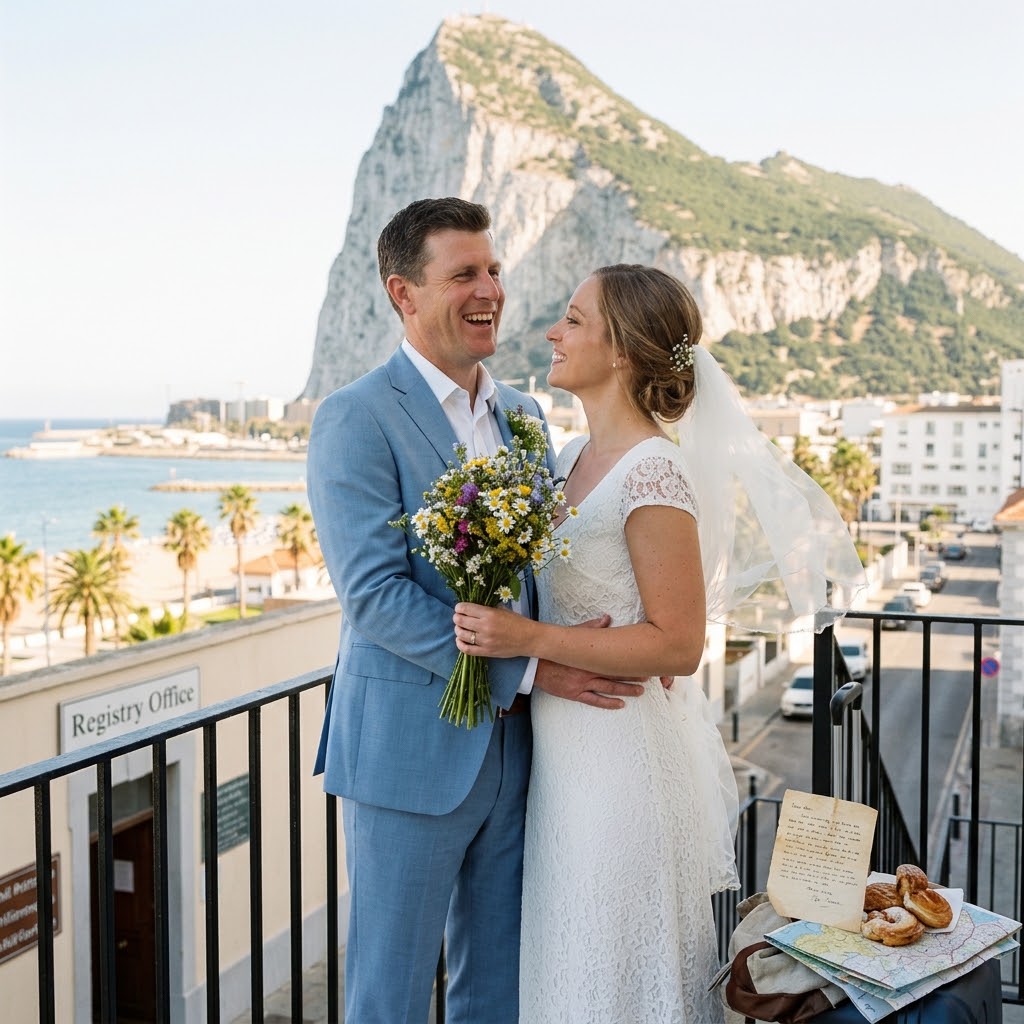
Gibraltar is worth investigating for international couples already planning a Costa del Sol wedding. It has its own legal marriage system, separate from Spain, and non-residents can travel there to marry as visitors, subject to its documentation and procedural requirements.
That does not mean Gibraltar is automatically the easiest route for every nationality. But it can be sensible to compare:
Use the current Gibraltar Government information rather than old wedding blogs, because procedures can change.
☐ Legal marriage in Spain
☐ Legal marriage in your home country
☐ Gibraltar or another jurisdiction
☐ Symbolic ceremony in Marbella
☐ Both nationalities
☐ Both countries of residence
☐ Spanish residency/empadronamiento, if applicable
☐ Previous marriages/civil partnerships
☐ Religious requirements, if applicable
☐ Passports/ID
☐ Birth certificates
☐ Civil-status documentation
☐ Divorce/death documentation where relevant
☐ Apostille/legalisation requirements
☐ Sworn Spanish translations
☐ Document validity/recent-issue requirements
☐ Registro Civil/notary
☐ Marbella Town Hall where applicable
☐ Spanish consulate for your jurisdiction
☐ Gibraltar Government if considering Gibraltar
Then book the legal element of the wedding.
Potentially, but the route depends especially on residence, nationality and the type of marriage. Marbella Town Hall requires the underlying marriage file to be authorised before it schedules its civil ceremony.
Residence can be crucial to the Spanish civil-marriage process. If neither partner is resident in Spain, do not assume a standard Marbella municipal civil wedding is available simply because your celebration is here.
Often, but not universally. It depends on the issuing country, the document and applicable international or EU rules.
Foreign-language documents may require an official Spanish translation. Confirm this before paying for translations because exemptions and requirements vary.
Do not assume a celebrant ceremony at a private venue automatically creates the legal marriage. Establish the legal route separately with the appropriate authority.
Yes, Gibraltar permits non-residents to enter as visitors for marriage or civil-partnership purposes, subject to its current documentation and procedural requirements.
For some couples, getting legally married in Spain will make perfect sense. For others, forcing the legal ceremony into the Marbella wedding adds paperwork without improving the experience. Gibraltar may offer another route worth comparing for some international couples.
Start with:
Nationality → residence → legal route → required documents.
Confirm everything with the appropriate authority. Then get back to the enjoyable decisions.
Because whether the legal signature happens in Marbella, Madrid, Manchester, Dublin, New York, Gibraltar or somewhere else, you can still have the Marbella wedding you actually came here for.

How to organise venues, suppliers, transport, visits and communication when you do not live in Spain.

See what €25k, €50k and €100k budgets can realistically create around Marbella and the Costa del Sol.

Compare May, June, July, August, September and October for weather, heat, daylight and guest comfort.

Start with the complete guide to venues, guests, logistics, weather, entertainment and the wider wedding weekend.