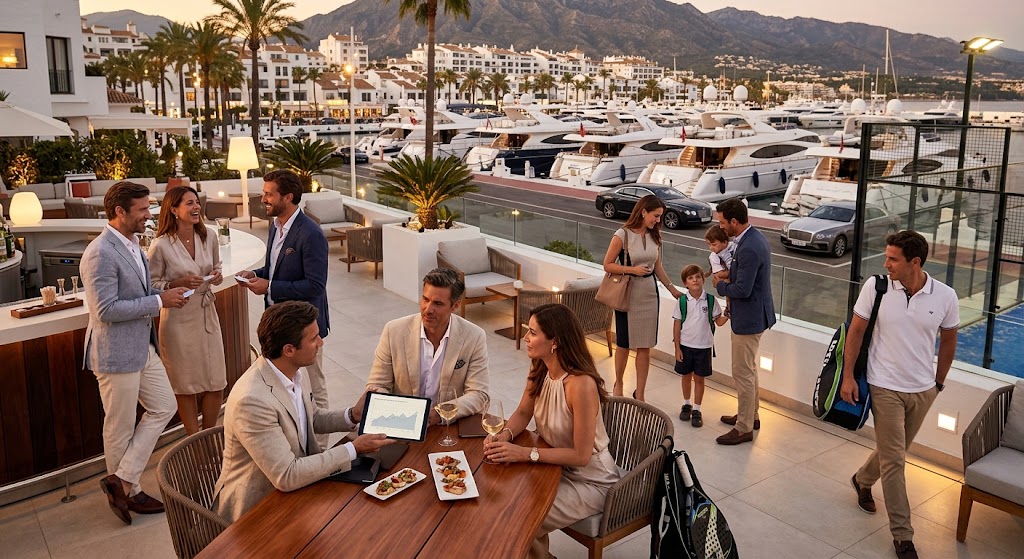

When is the best time to get married in Marbella? This practical month-by-month guide compares weather, heat, daylight, guest comfort, peak-season pressure and the type of wedding each part of the year suits best.
Our short answer: for most couples, May, June and September offer the strongest overall balance of warm weather, long evenings and guest comfort in Marbella. July and August offer the most reliable summer atmosphere, but they are hotter and busier. October can be beautiful for couples who prefer milder temperatures, provided the venue has a Plan B for unsettled weather.
The best month is not simply the hottest month. It is the month where weather, daylight, venue, guest comfort and the wider wedding trip all work together.
Warm, comfortable and increasingly long evenings. Excellent for outdoor finca and garden weddings.
Proper summer atmosphere with some of the longest evenings of the year.
Summer still feels present, the sea is warm and peak August intensity begins to ease.
Maximum summer atmosphere and reliable sunshine, but weddings need to be designed around the heat.
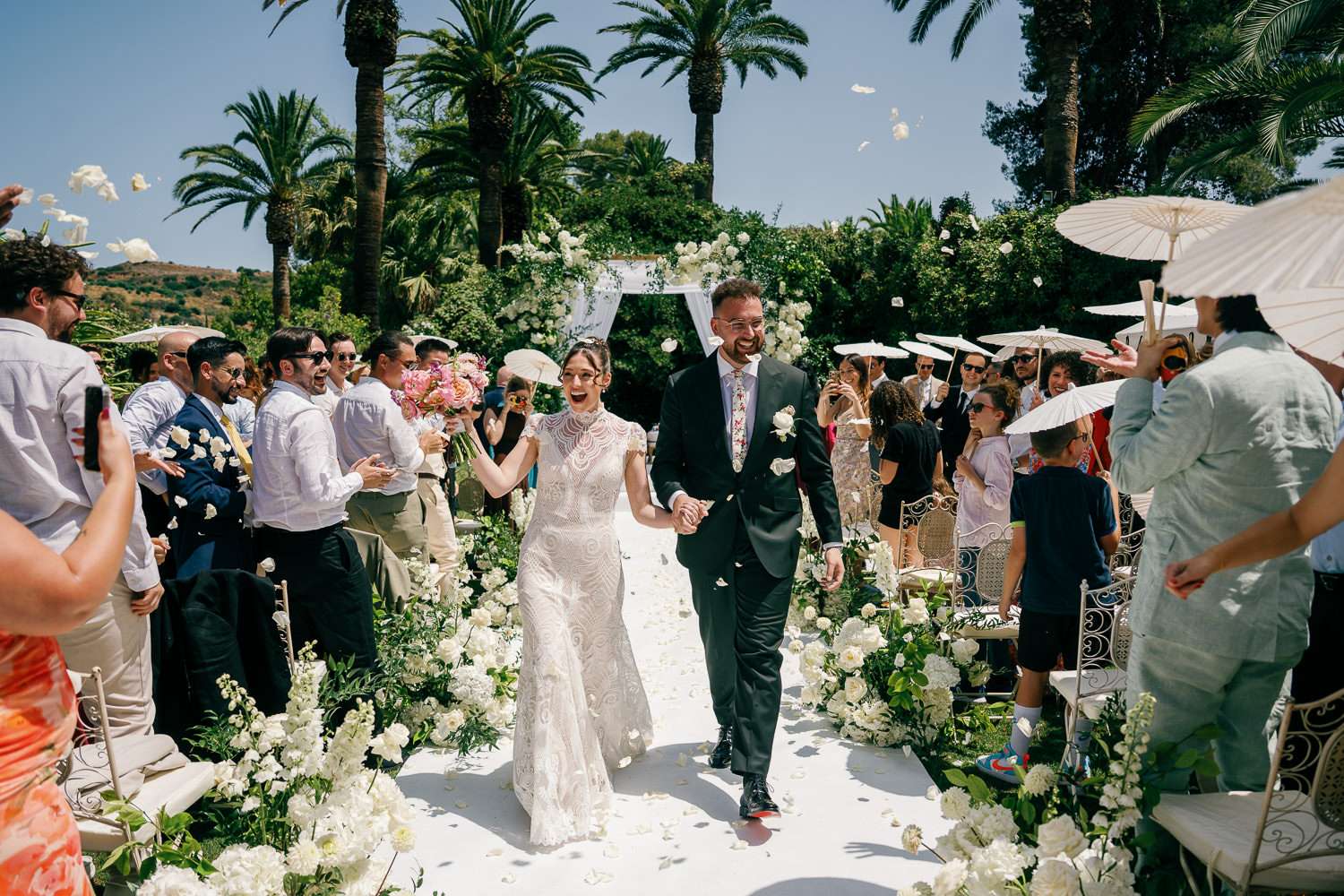
The most useful way to choose a month is to think about how the day will actually feel, not simply whether the forecast icon shows a sun. Formal clothes, outdoor ceremonies, alcohol, older guests, children, makeup, photographs and travel all change the calculation.
April is when Marbella starts feeling properly spring-like. Days are longer, the landscape can be greener than later in summer and temperatures are generally comfortable for formal clothing. The trade-off is weather certainty. An April wedding can be superb, but we would only choose a venue with an indoor or covered Plan B that still feels special.
Best for: couples who value comfort, spring scenery and a quieter Marbella over maximum heat.
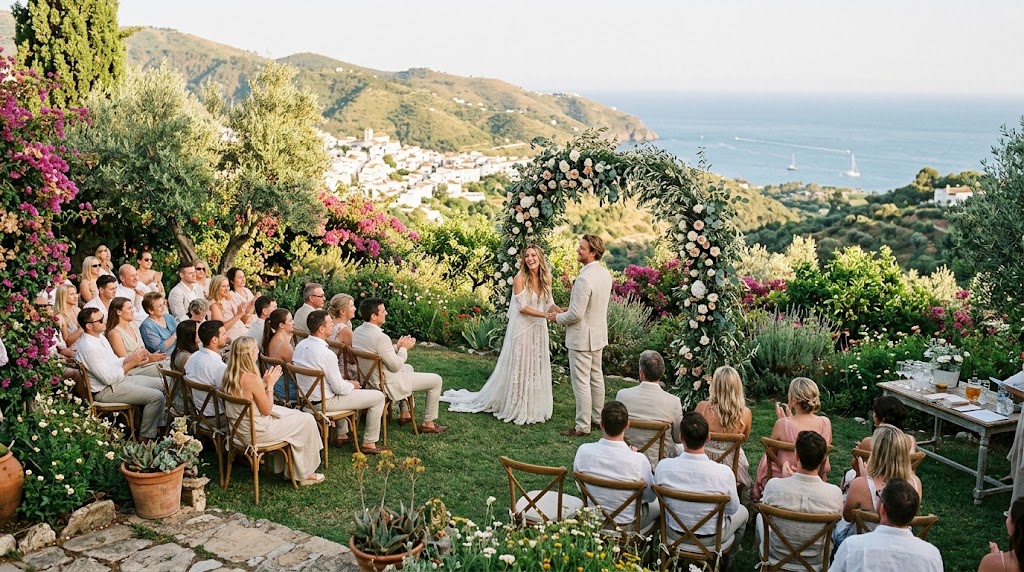
By late May the days are long enough for an afternoon ceremony, drinks, photographs and dinner without feeling as though everything has to race the light.
Best for: finca weddings, gardens, guest comfort and couples who want southern-Spain warmth without deliberately choosing peak heat.
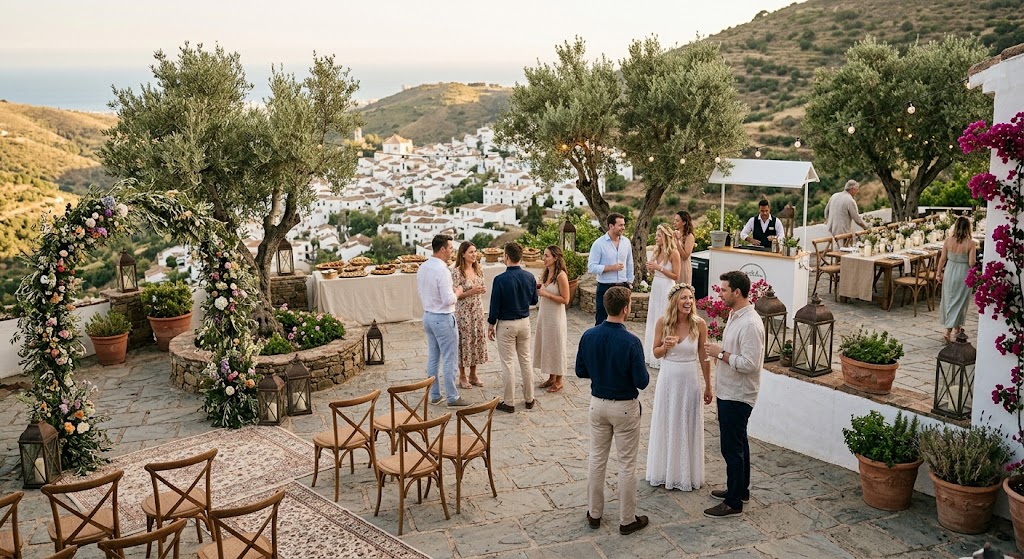
Later June is hotter, so shade and ceremony timing still matter.
Best for: long outdoor evenings, photography, summer atmosphere and multi-day destination weddings.
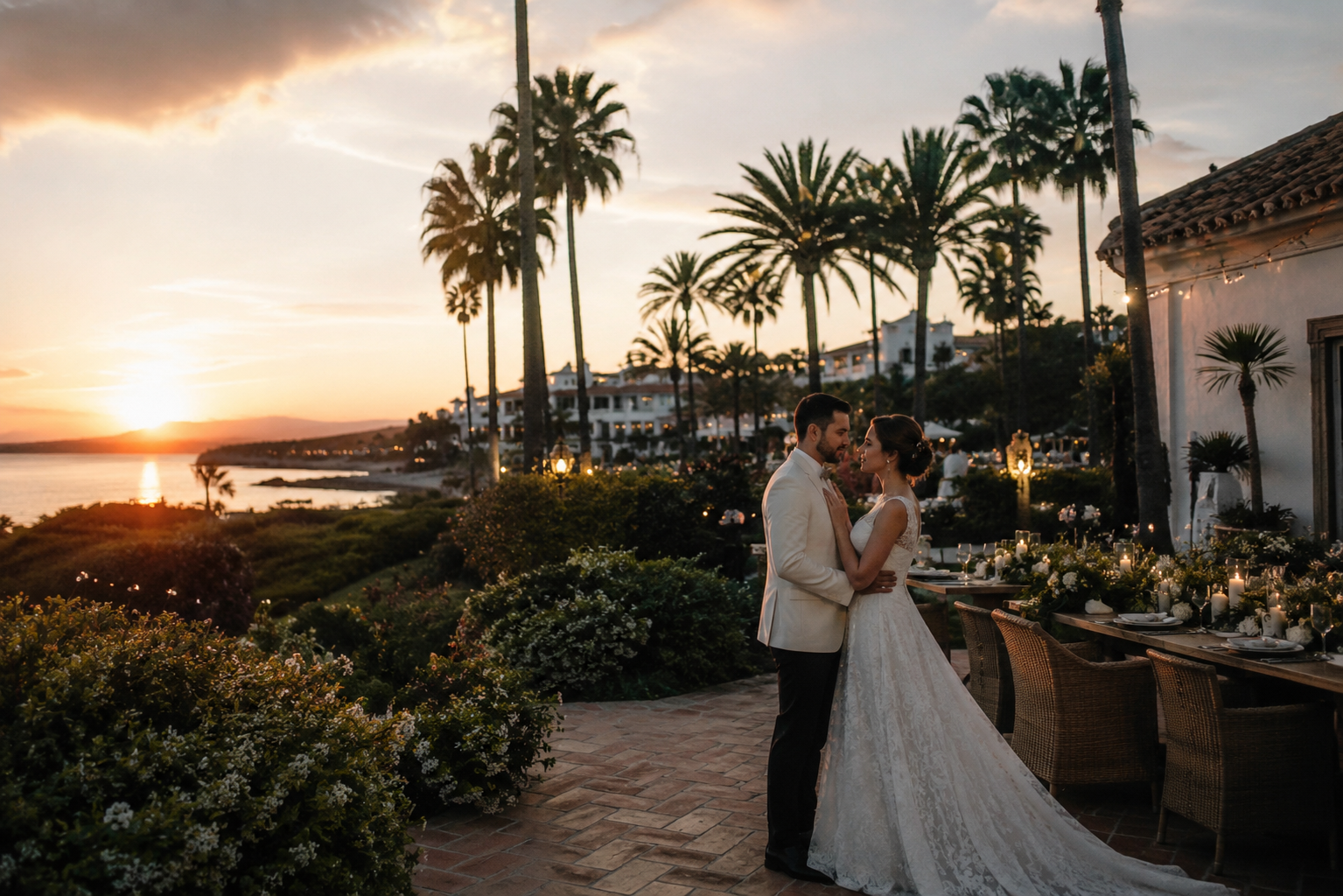
July can produce a fantastic Marbella wedding, but we would design the day around the climate. A midday or early-afternoon outdoor ceremony would not be our first choice. Later ceremonies, shade, cold water and somewhere guests can cool down become part of the infrastructure rather than optional extras.
Best for: couples who actively want a full summer destination experience and are happy to build the schedule around heat.
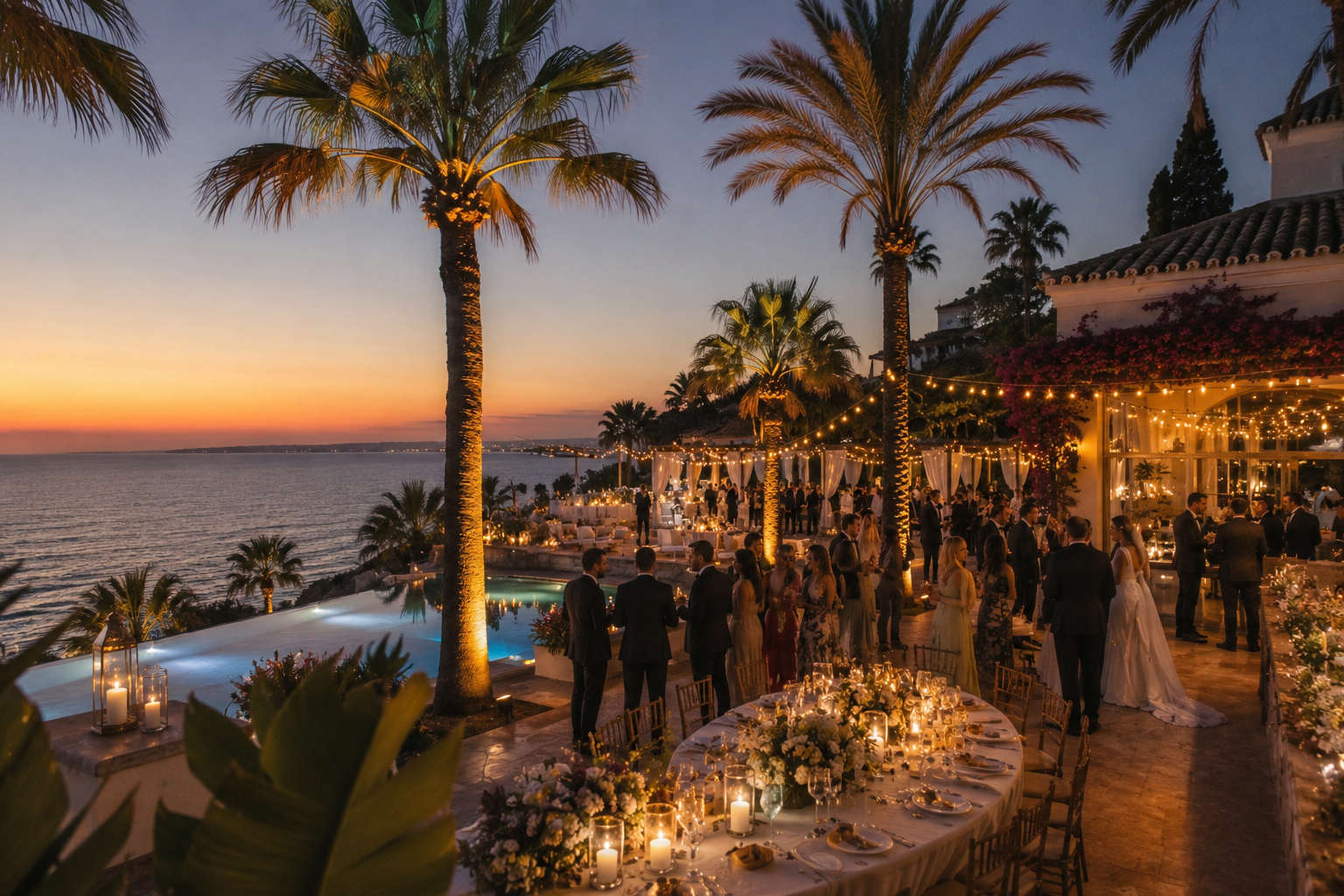
August is hot, busy and energetic. For some couples, that is exactly the Marbella they want: villas, pools, beach clubs, nightlife and a wedding that becomes part of the guests’ summer holiday. The trade-off is peak-season pressure on accommodation, restaurants, roads and guest comfort.
Best for: a late-day/evening wedding where guests genuinely want peak Marbella.
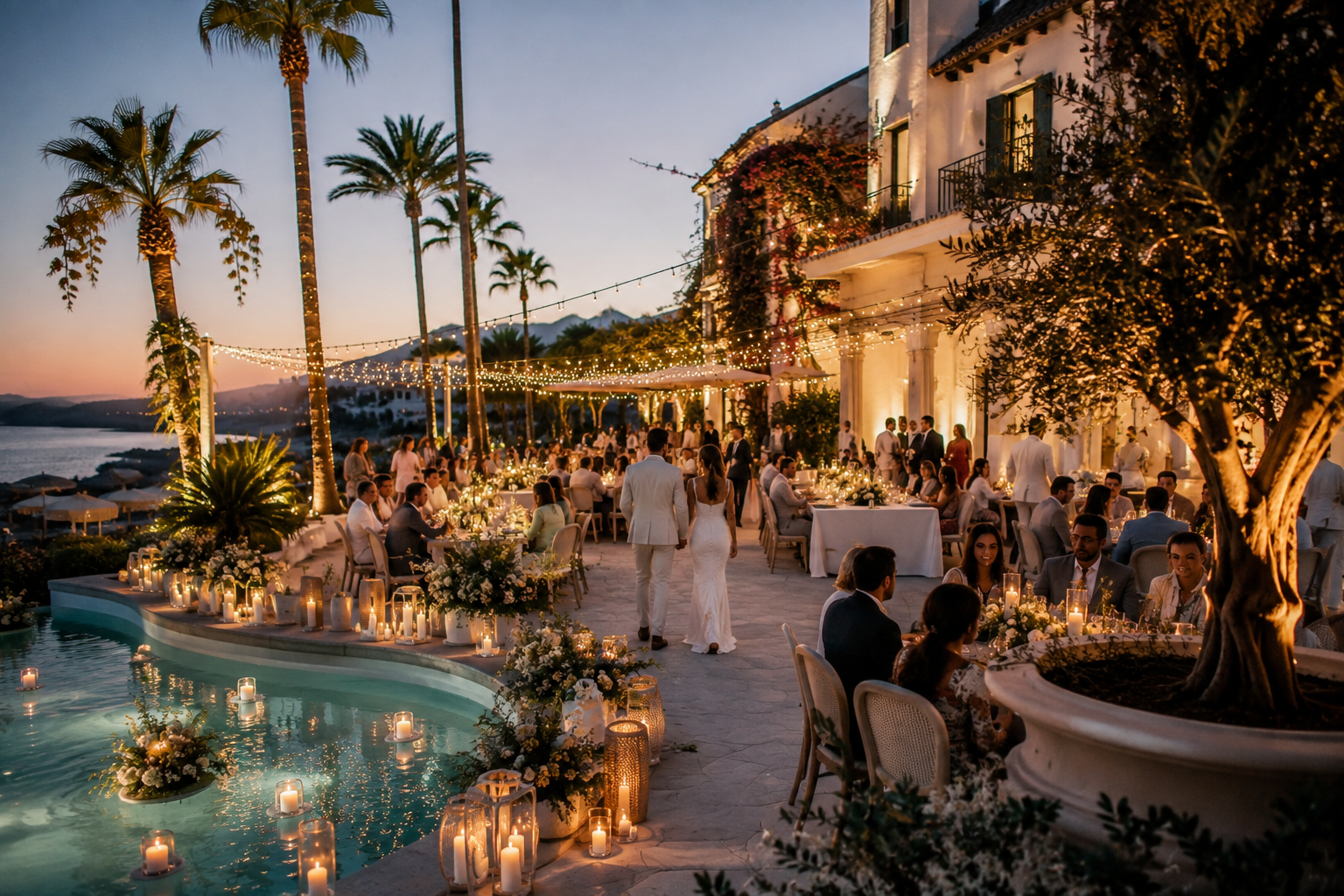
September is the other month we would put right at the top of the shortlist. Marbella still feels summery, the sea has had the whole summer to warm up and outdoor dinners remain completely natural, while the intensity of August starts to ease. The main planning change is that sunset moves earlier as the month progresses.
Best for: warm evenings, beach/pool days around the wedding and couples who want summer without choosing the absolute peak.
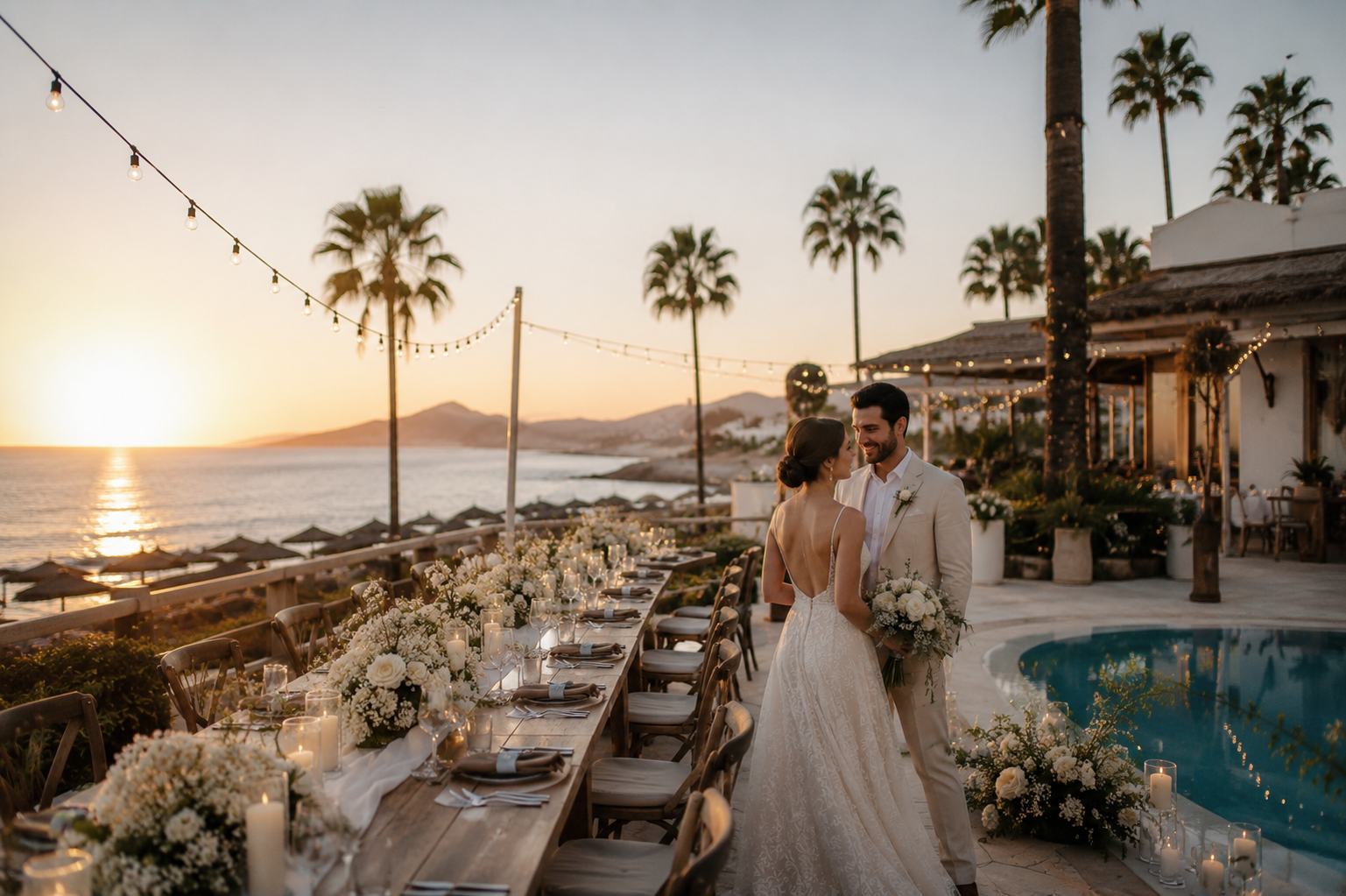
October can be excellent for couples who dislike serious heat. Marbella is calmer, formal clothing becomes easier and outdoor lunches can still be beautiful. The compromise is greater weather uncertainty and shorter daylight. If the indoor or covered alternative feels like a disappointing consolation prize, choose another venue.
Best for: comfortable temperatures, quieter Marbella and venues with a genuinely strong Plan B.
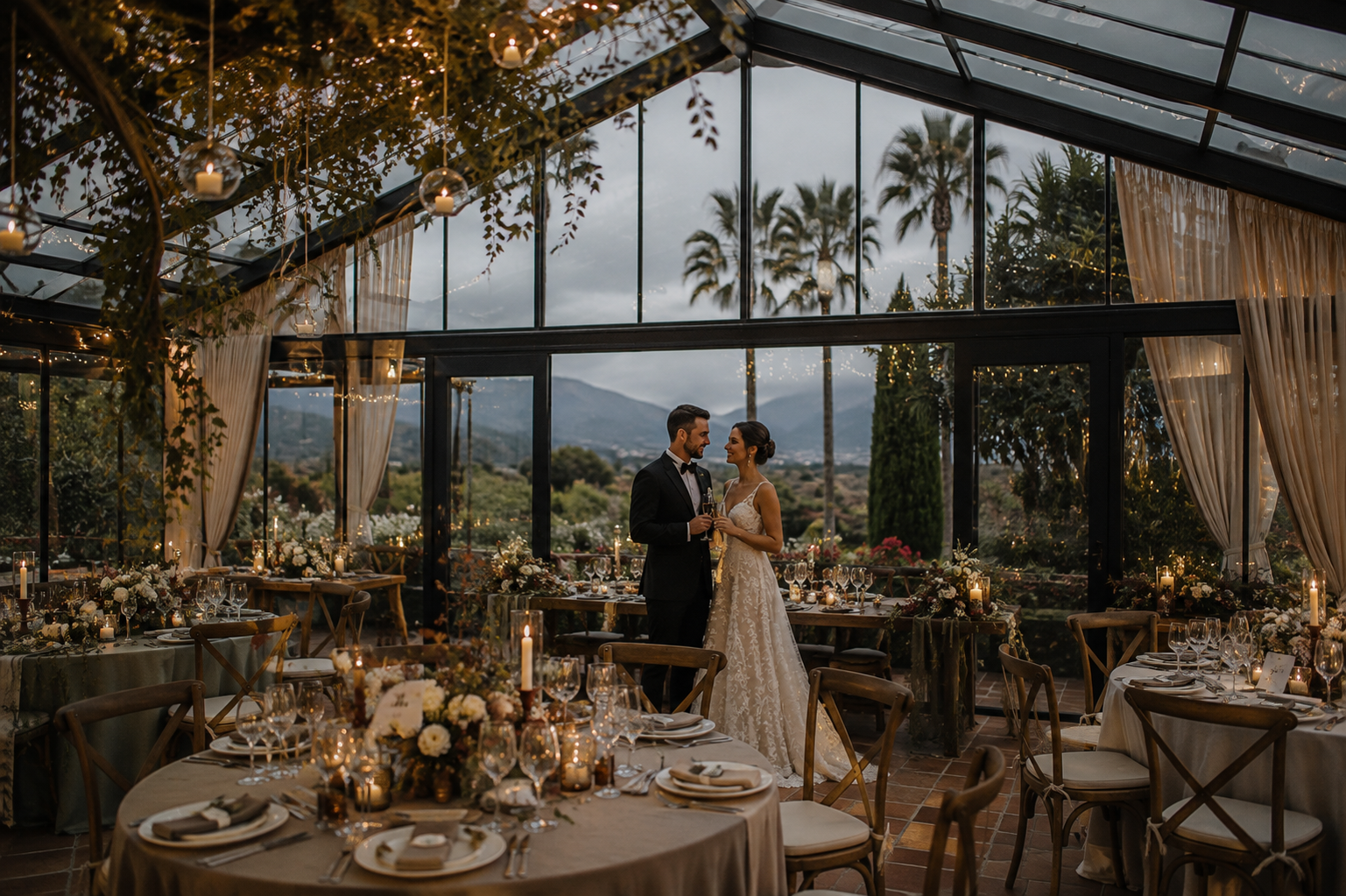
Winter should not automatically be dismissed, but it is a different proposition. This is less about pool days and long warm nights and more about a smaller, quieter celebration built around food, an excellent hotel, Marbella Old Town or a venue that works beautifully indoors as well as outside.
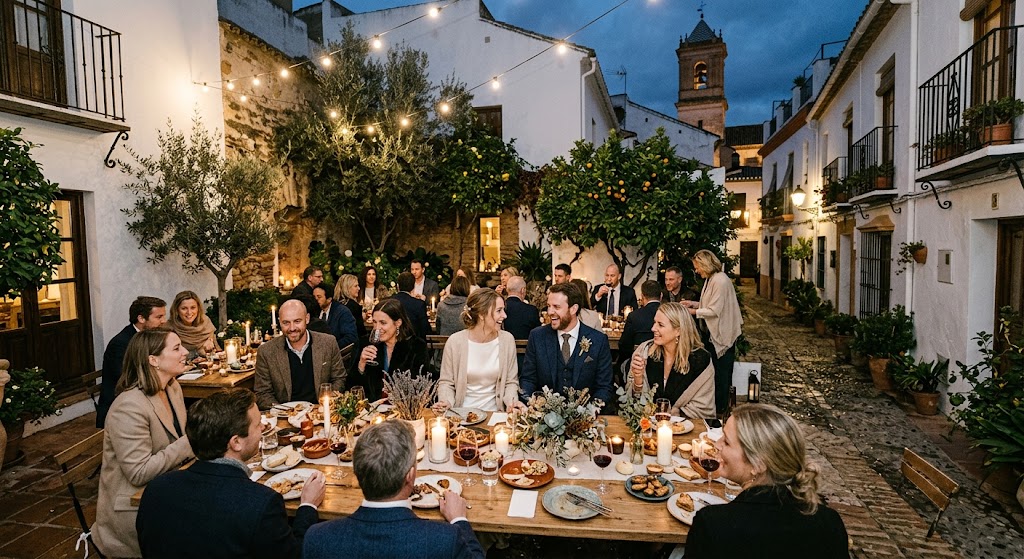
Thirty-degree-plus weather beside a pool can be perfect. The same heat feels very different in a suit, long dress or full makeup while waiting for a ceremony to begin.
For weddings, we would judge Marbella weather by comfort, not maximum temperature.
If you choose July or August, let the climate shape the schedule: later ceremony, shade, water, slower transitions, dinner later and the party continuing into the evening.
A beachfront venue can feel completely different from an enclosed courtyard. A finca in the hills can feel different from central Marbella. Shade, breeze, orientation, elevation and surrounding stone all influence how comfortable a wedding actually feels.
Our practical test: visit the venue at roughly the same time of day as your planned ceremony, ideally in a similar part of the year. Stand where your guests will sit for twenty minutes. You will learn more than you will from the brochure.
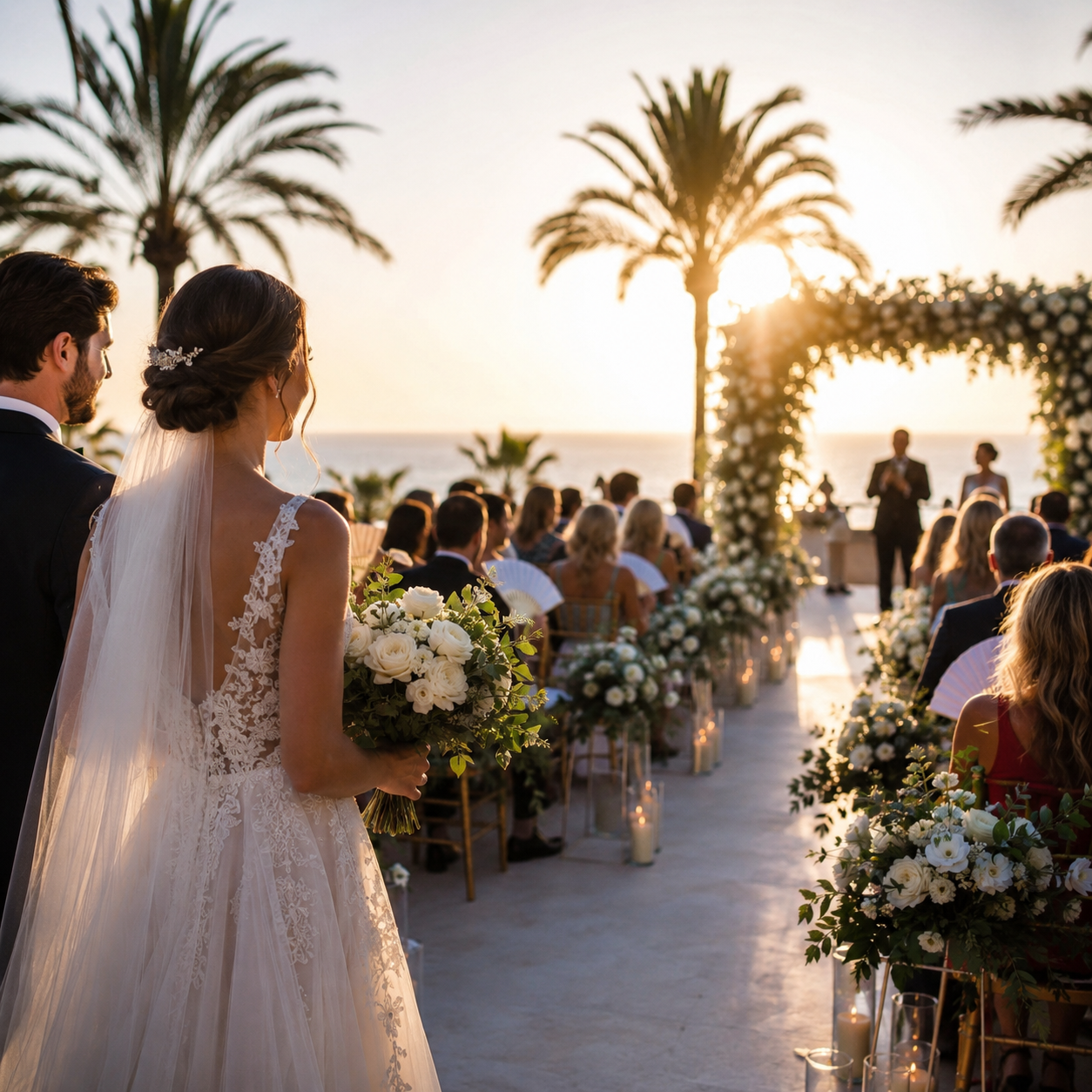
Wedding photographers talk about golden hour for a reason. Softer evening light can produce some of the best photographs of the day, and Marbella’s long spring and summer evenings give you flexibility.
But sunset changes significantly across the season. May and June give you the latest light. By September, days are shortening much faster. That affects ceremony time, couple photographs, cocktail hour, dinner, speeches and when the party starts.
If photographs matter enormously to you, speak to the photographer before you lock the entire schedule.
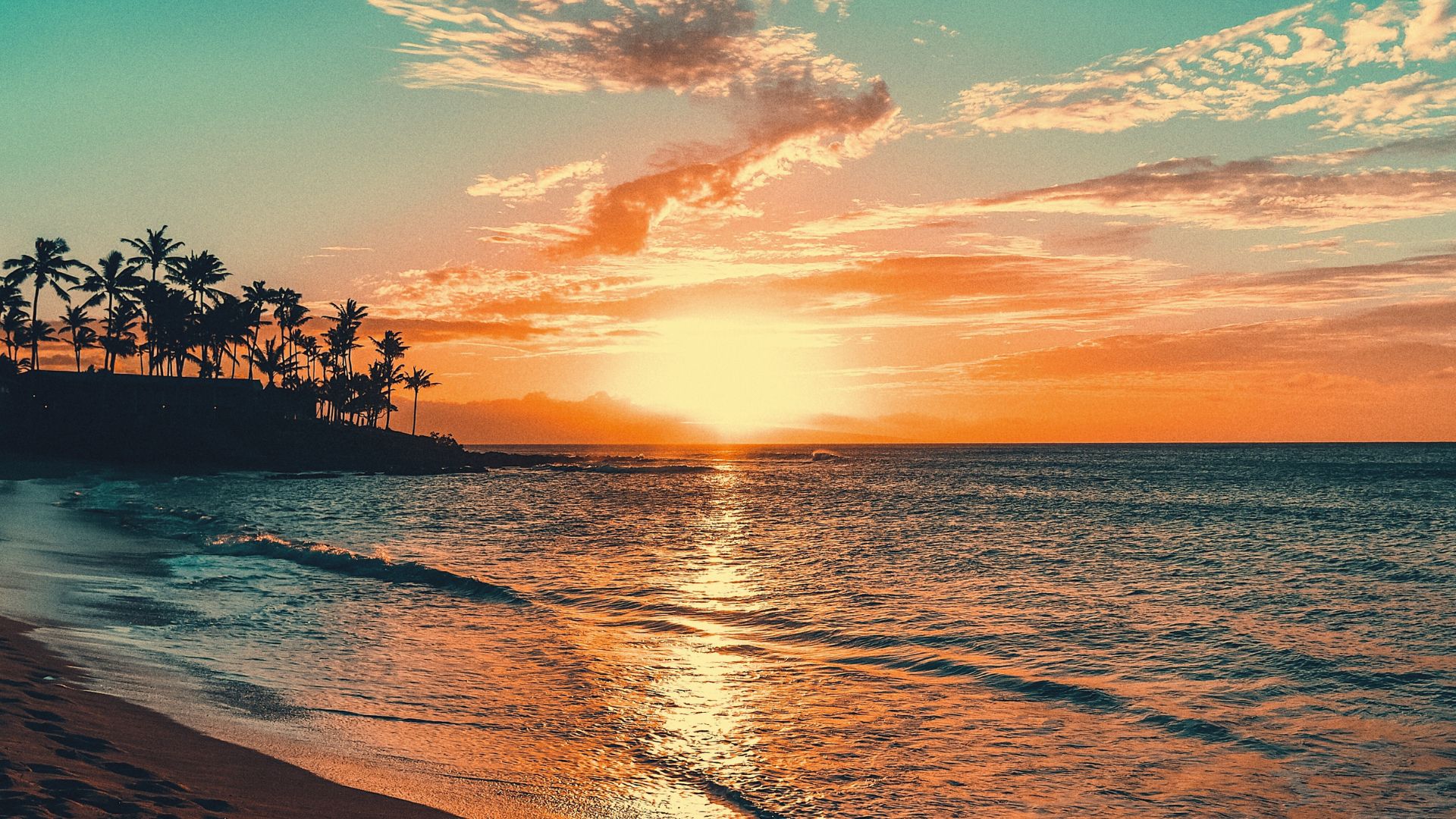
A destination wedding is also a trip. Your guests may be in Marbella for three, four or five days, so the month affects far more than the ceremony.
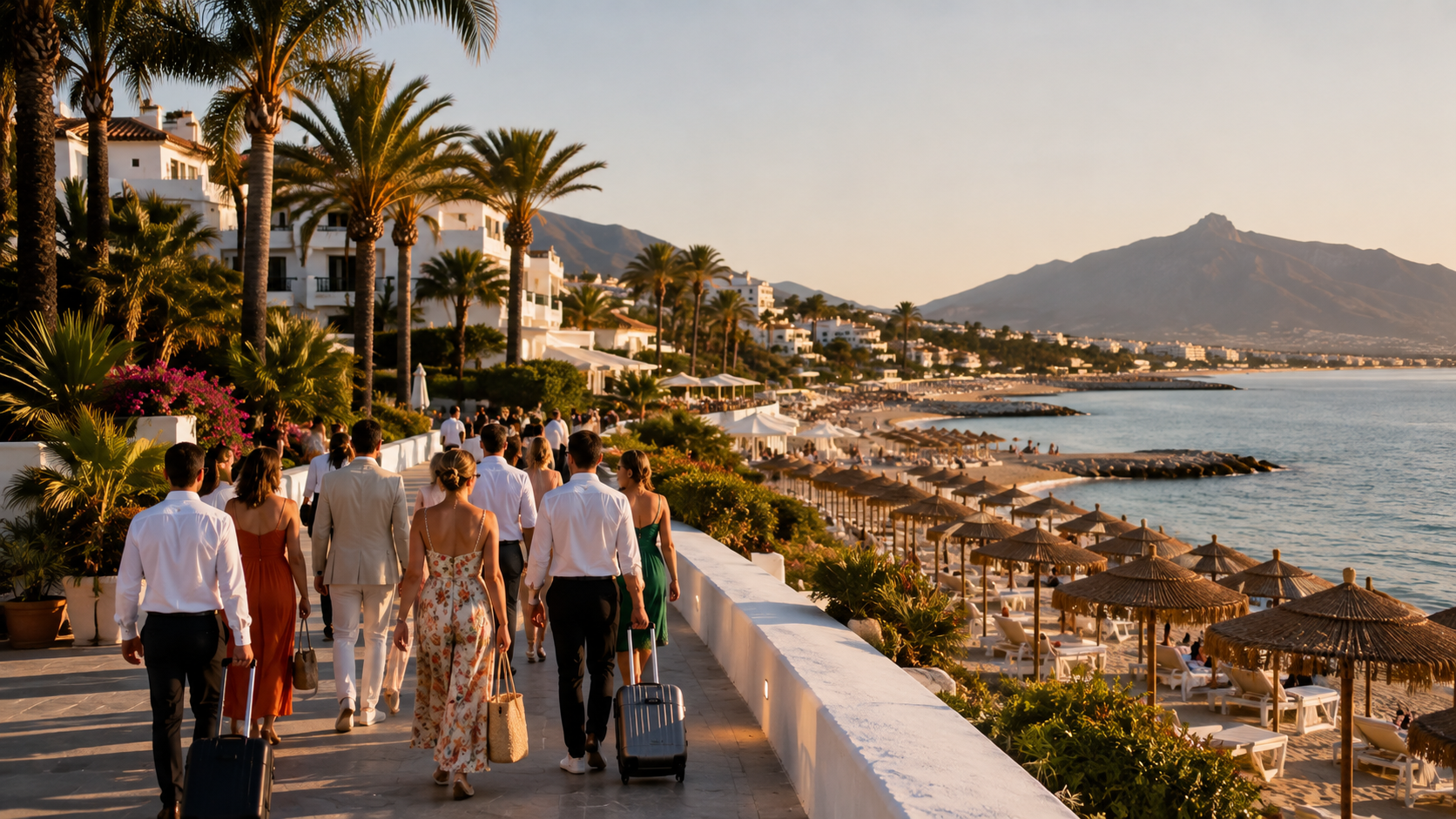
A destination wedding is also a trip. Your guests may be in Marbella for three, four or five days, so the month affects far more than the ceremony.
Summer: beaches, pools, boats and long evenings — but potentially higher flight/accommodation costs, more traffic and more crowds.
May: excellent wedding comfort and long days, though the sea does not have the same late-summer warmth.
September: a particularly attractive compromise because the Mediterranean has been warming for months while peak August pressure starts to ease.
October: comfortable wedding temperatures, but the surrounding trip becomes less reliably a beach holiday.
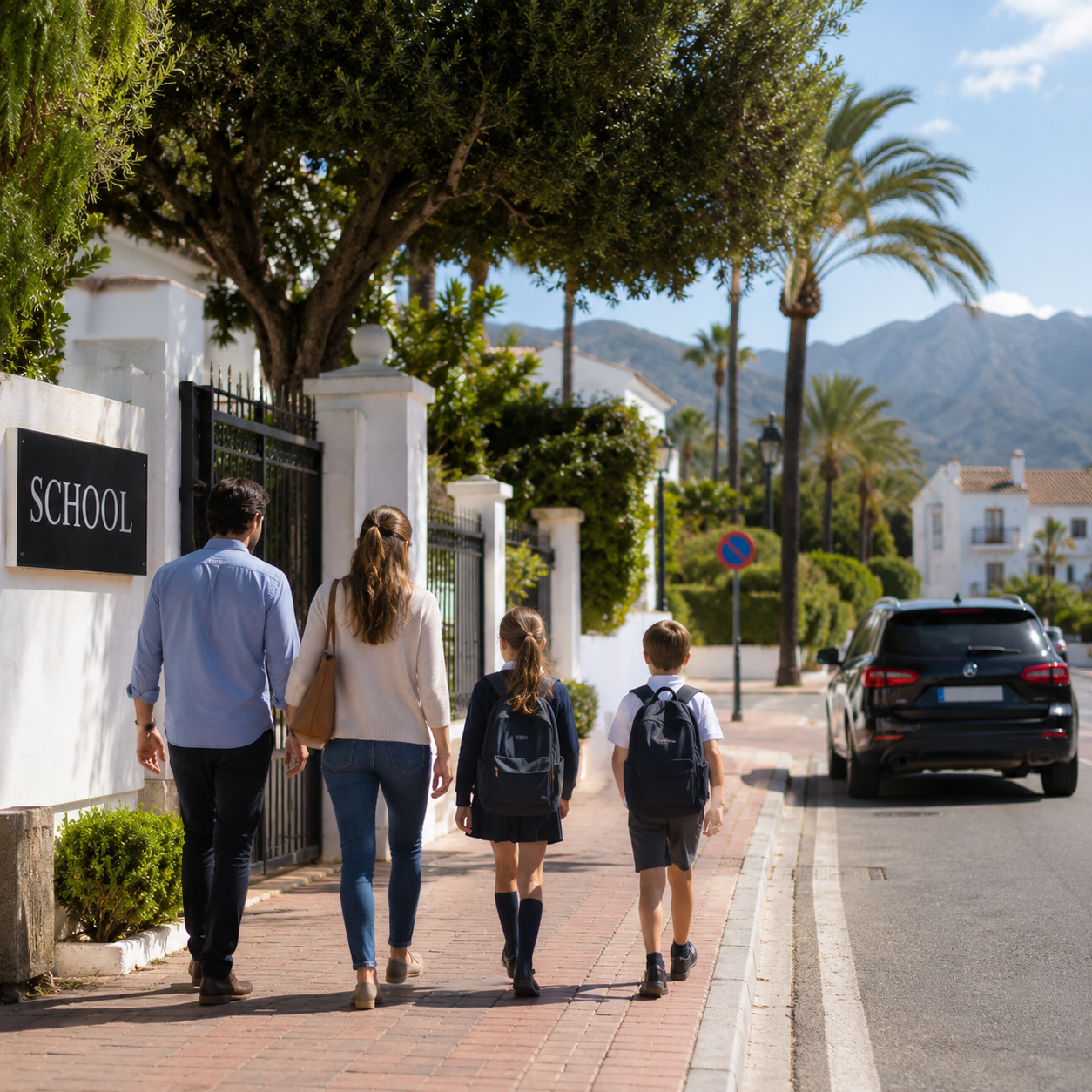
School holidays can change the calculation
If many guests have children, July and August may actually be easier because families are not navigating school attendance. For everybody else, those same weeks can mean more competition for flights and accommodation.
Choose the month for the people who actually need to get there not for an abstract idea of perfect weather.
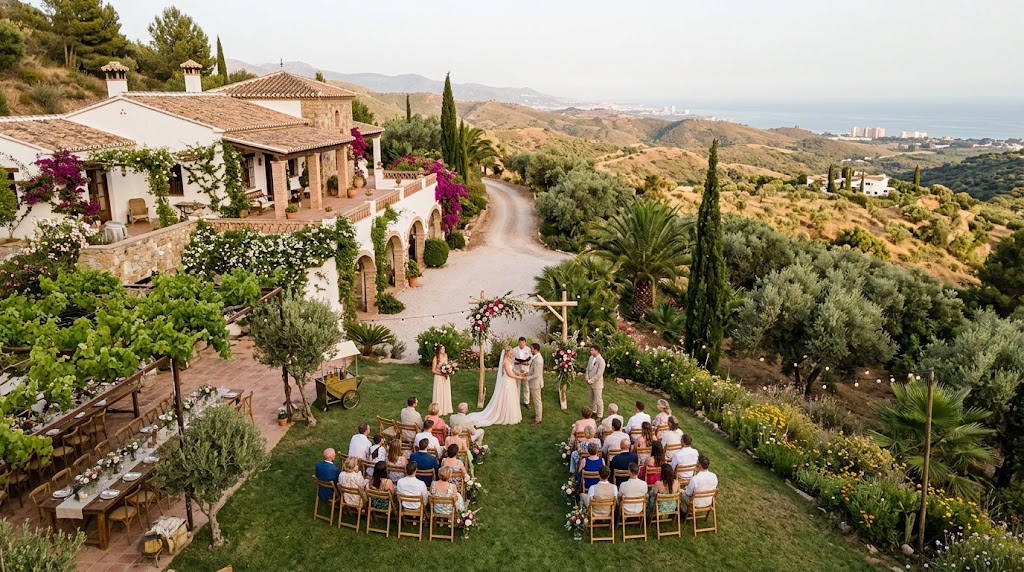
Our pick: June or September. Strong summer atmosphere, with September particularly attractive if guests want to swim.
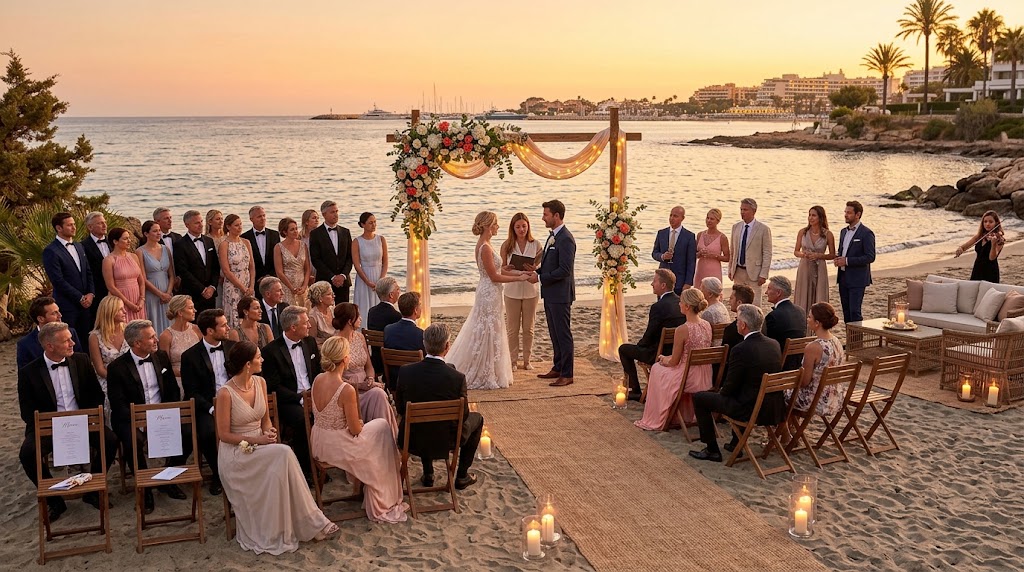
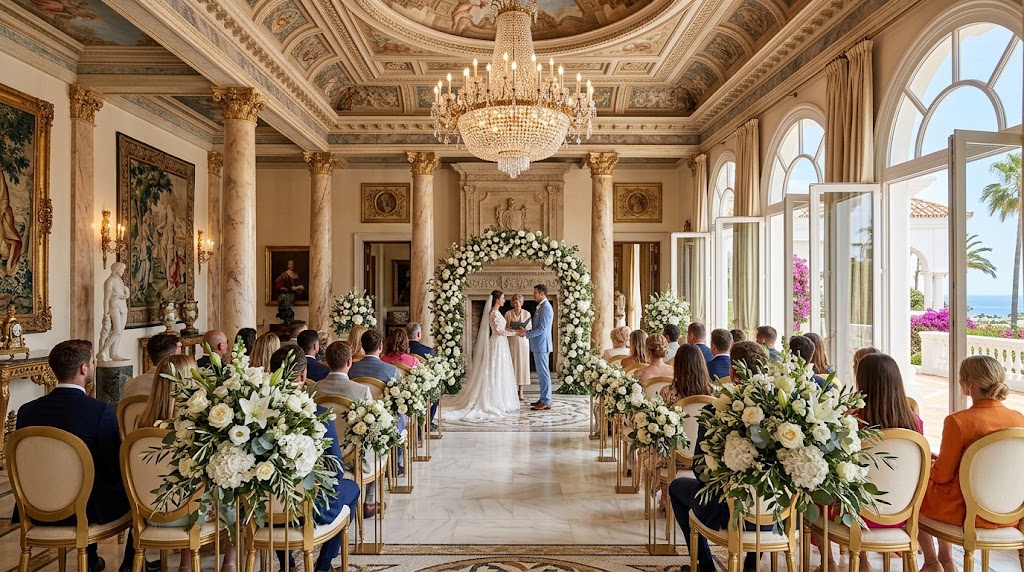
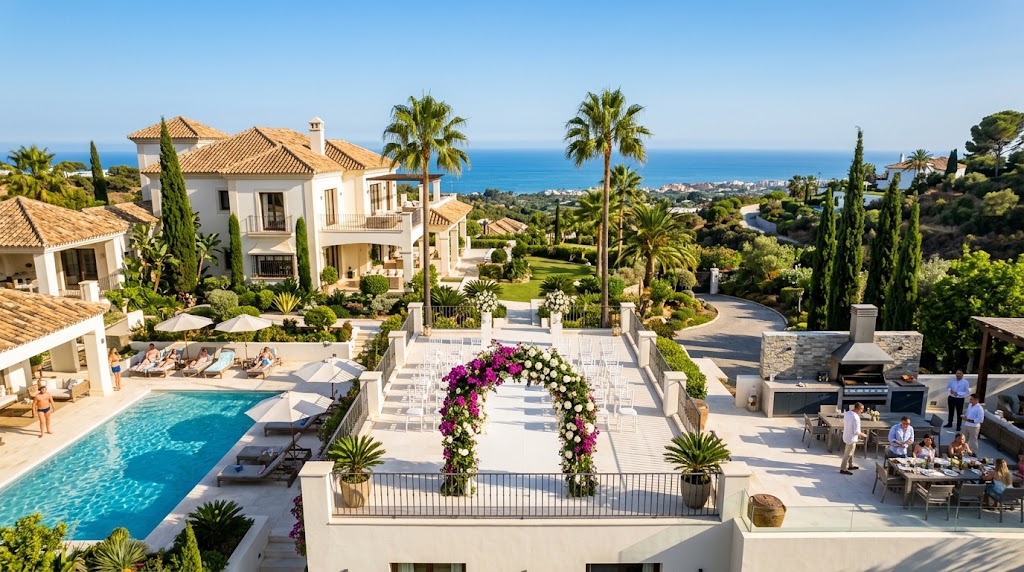
Our pick: spring or autumn. You do not need peak summer conditions to make this work beautifully.
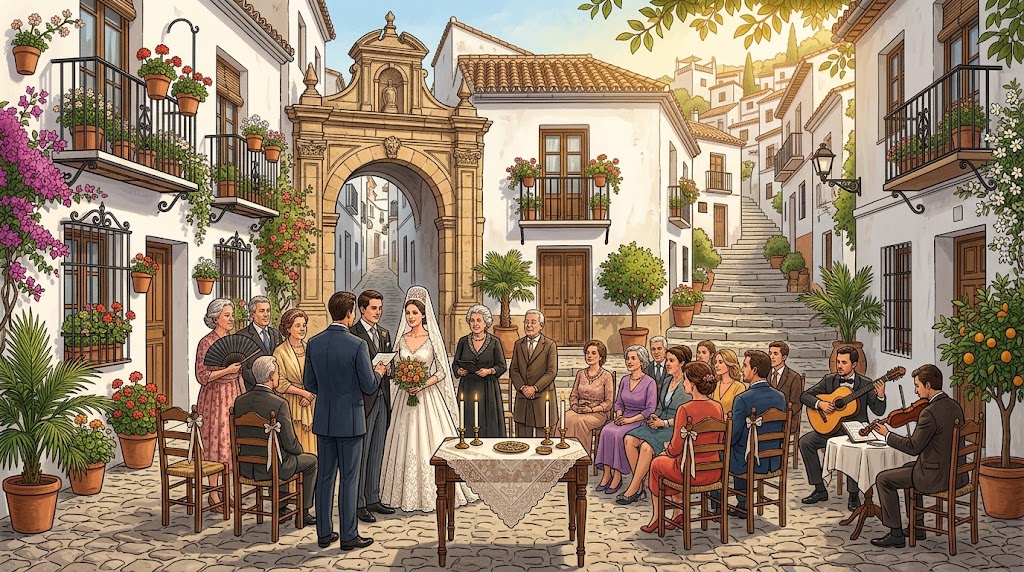
Our pick: potentially school-holiday periods – but only if the venue and timings are designed for the heat.
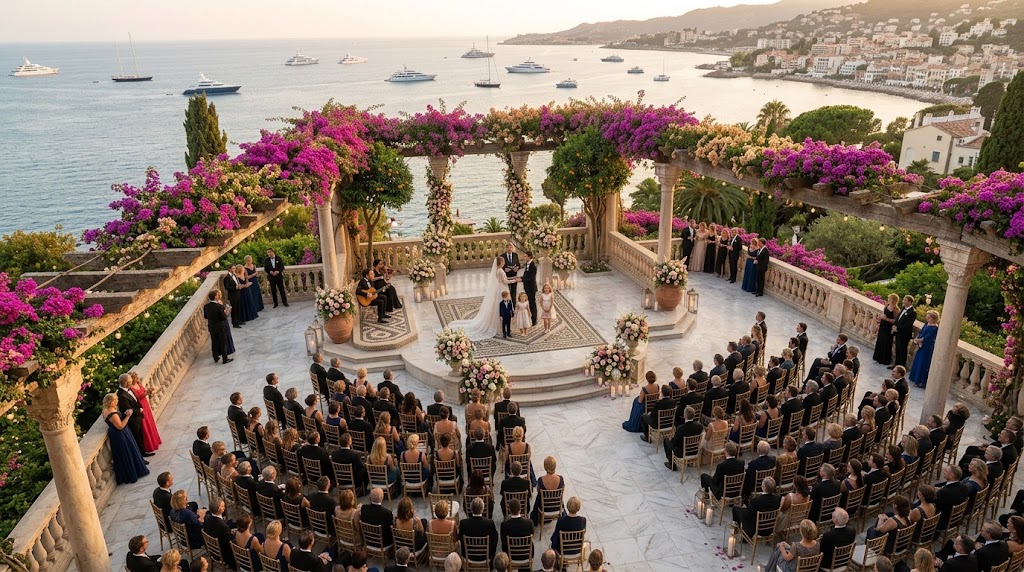
Afternoon ceremony → outdoor drinks → photographs → dinner outside → sunset photographs → entertainment into the evening. This is probably the easiest schedule.
Give the hottest part of the afternoon back to the swimming pool. Later ceremony → shade and cold drinks on arrival → cocktails as the sun begins to drop → dinner later → party late. You are in Spain. Use the evening.
Similar to summer, but watch sunset more carefully as the month progresses. The ceremony may need to move a little earlier than it would in June.
Earlier ceremony → make the most of daylight → outdoor elements where weather allows → a strong indoor or covered evening option.
Marbella sunshine makes outdoor weddings unusually viable. It does not guarantee your exact date.
Ask every venue: Where does the ceremony move? Can everyone fit comfortably? What happens to drinks, dinner and entertainment? How quickly can the decision be made?
If the backup space feels like a disappointing consolation prize, the venue does not really have a Plan B.
For the best overall balance of warm weather, long evenings and guest comfort, we would shortlist May, June and September. The best choice depends on whether you prioritise daylight, maximum summer atmosphere, swimming, lower crowds or weather certainty.
Yes. May can combine warm days, comfortable formal-wear conditions and increasingly long evenings. It is one of our strongest choices for outdoor finca and garden weddings.
Yes. June combines a proper summer atmosphere with some of the longest evenings of the year, which gives planners and photographers a lot of flexibility.
Not necessarily, but the wedding should be designed around the heat. Later ceremonies, reliable shade, water and somewhere guests can cool down become much more important.
It can be very hot, particularly for daytime outdoor ceremonies and formal clothing. August can still work extremely well if you actively want peak Marbella and schedule the day later.
Yes. September is one of our favourite options because Marbella still feels summery and the sea remains warm, while the peak August period begins to ease.
Absolutely. October can offer comfortable temperatures and a calmer destination, but weather uncertainty is greater than in high summer. Choose a venue with a covered or indoor alternative you would genuinely be happy to use.
There is no universal time because the date, venue orientation and shade all matter. In July and August, we would generally avoid building an outdoor ceremony around the hottest part of the afternoon and make use of the long evening instead.
May, June and September are particularly strong candidates because they can combine warm weather with more comfortable guest conditions than the hottest part of summer.
It can. Marbella has an excellent climate for outdoor weddings, but no month removes weather risk completely. Every outdoor wedding should have a credible Plan B.