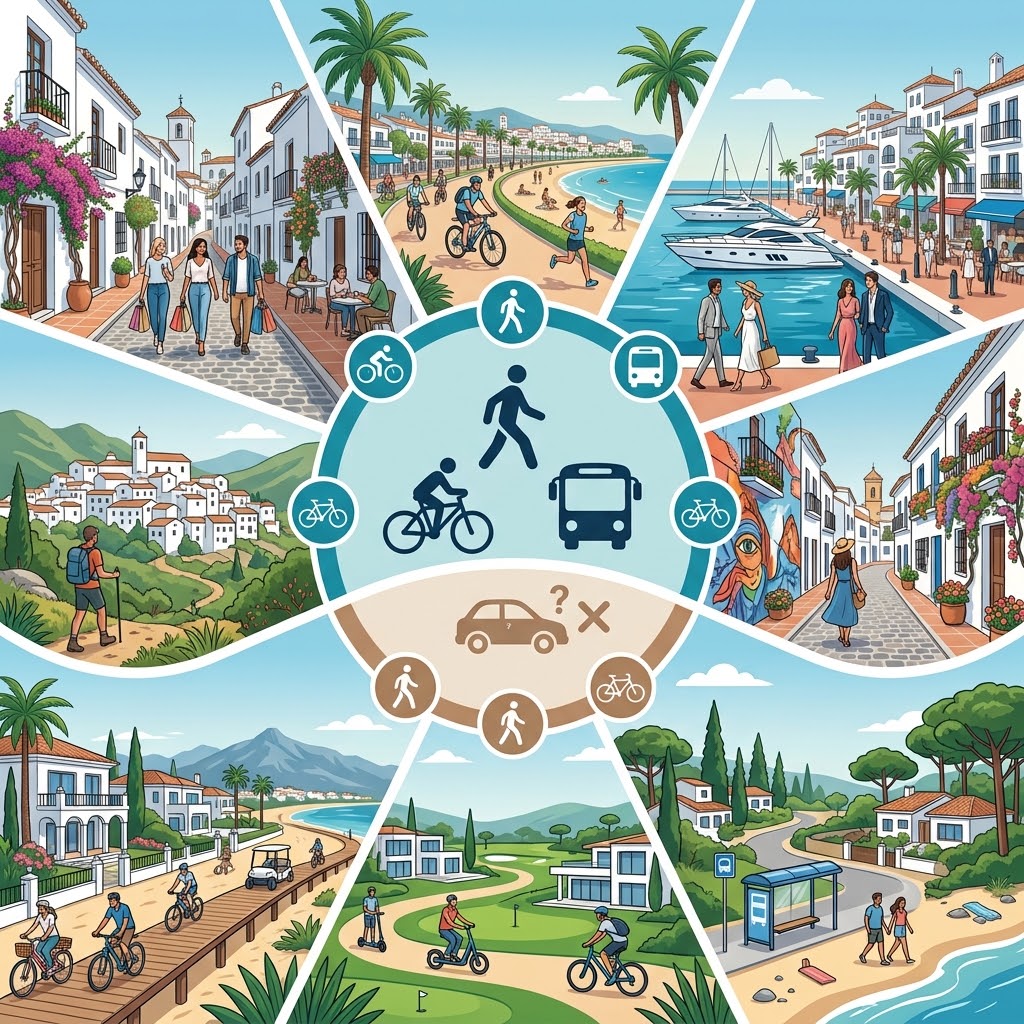
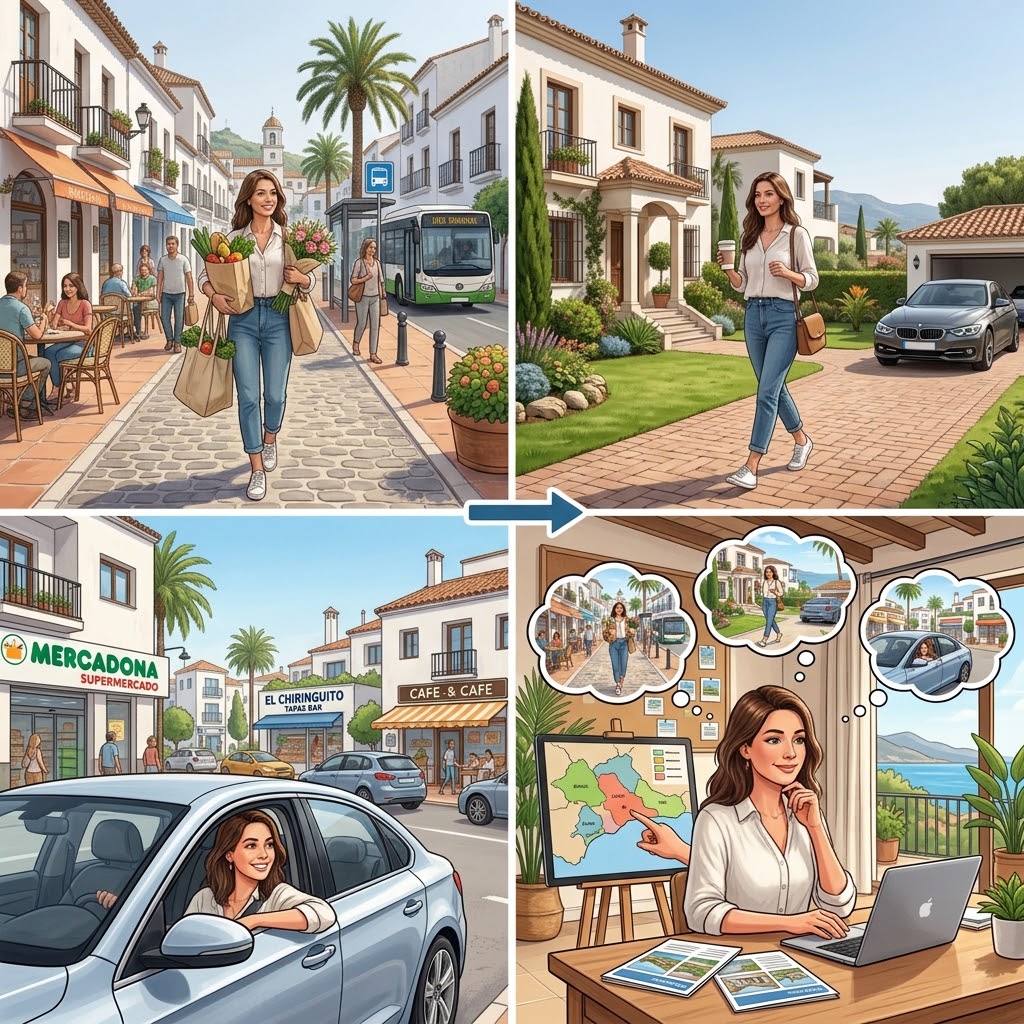
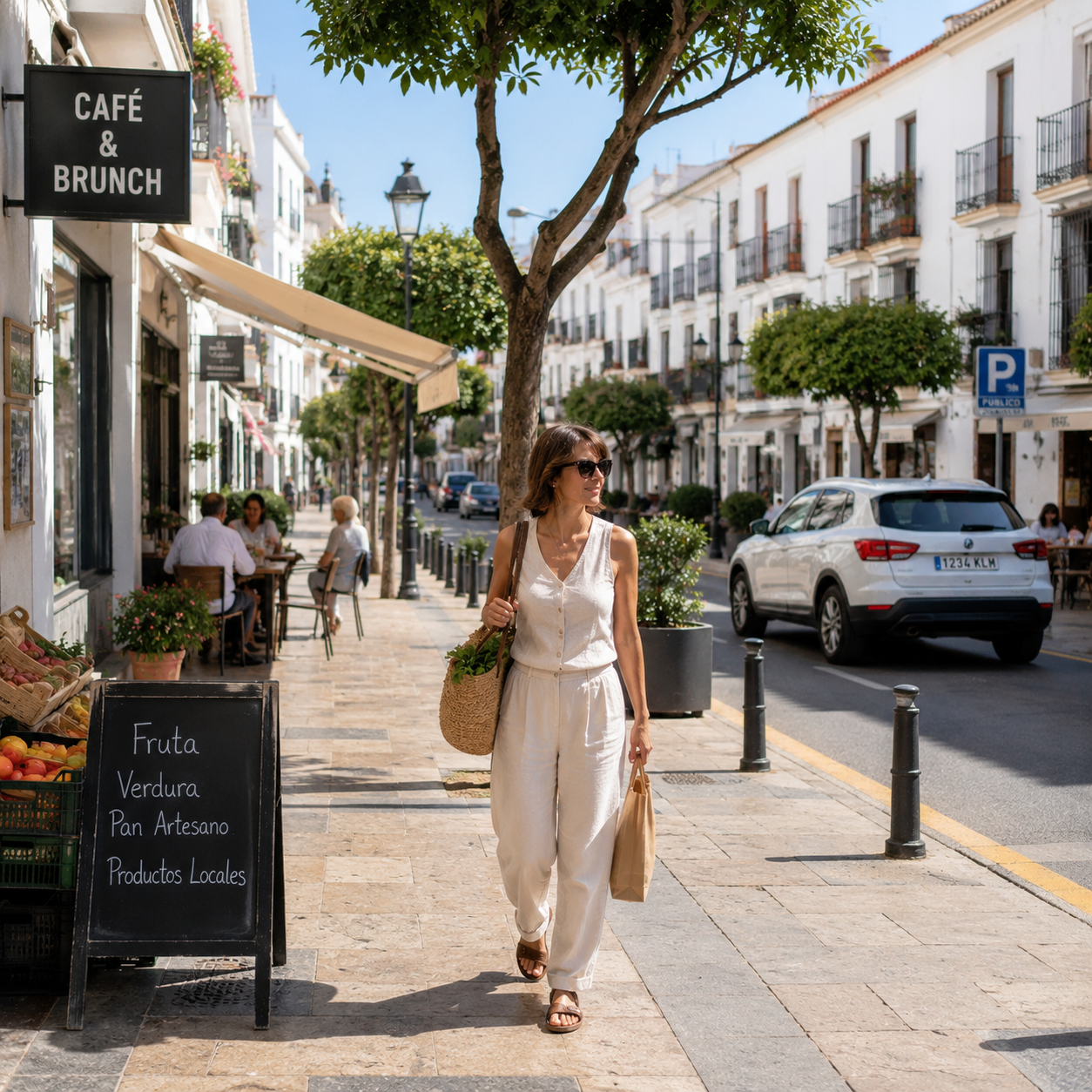
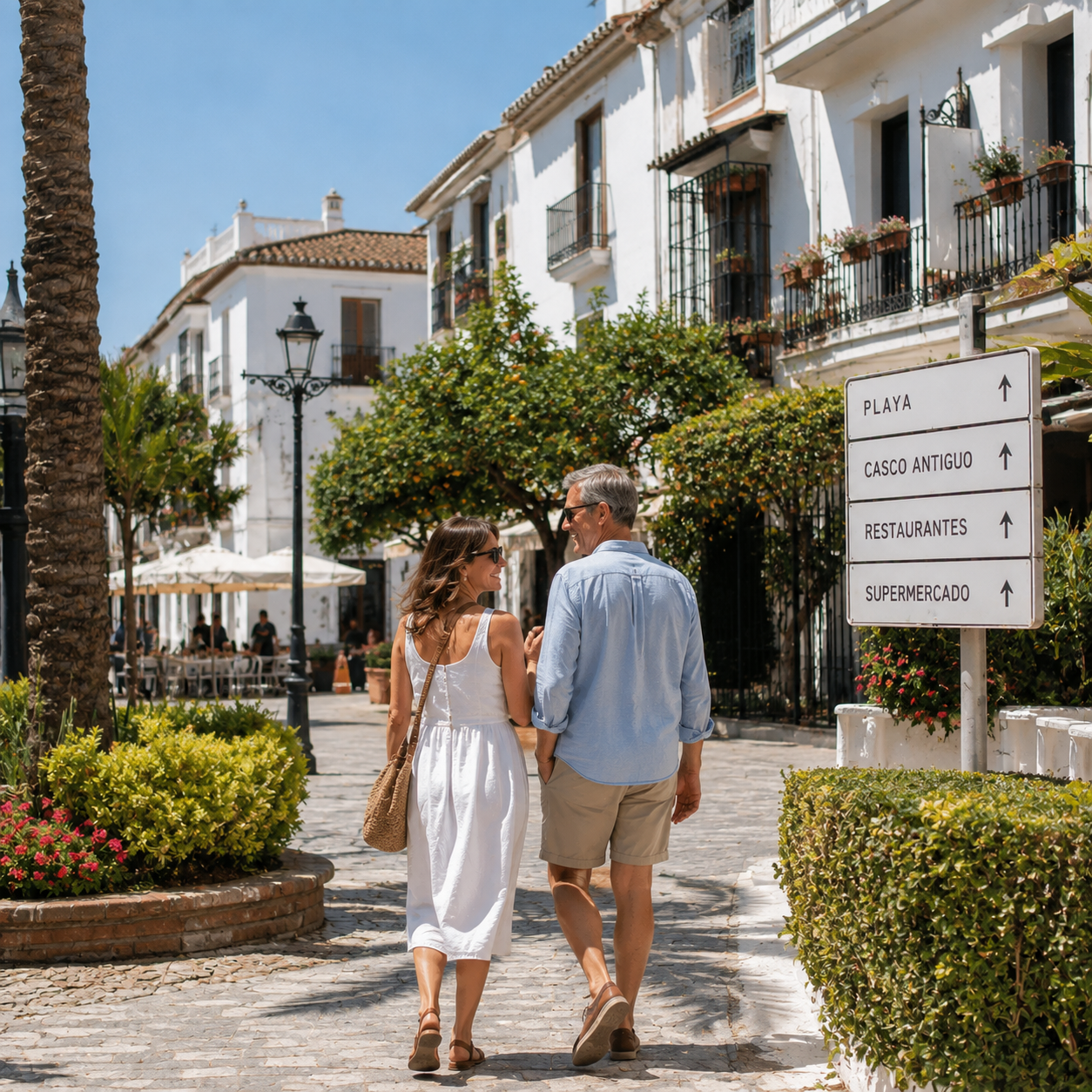
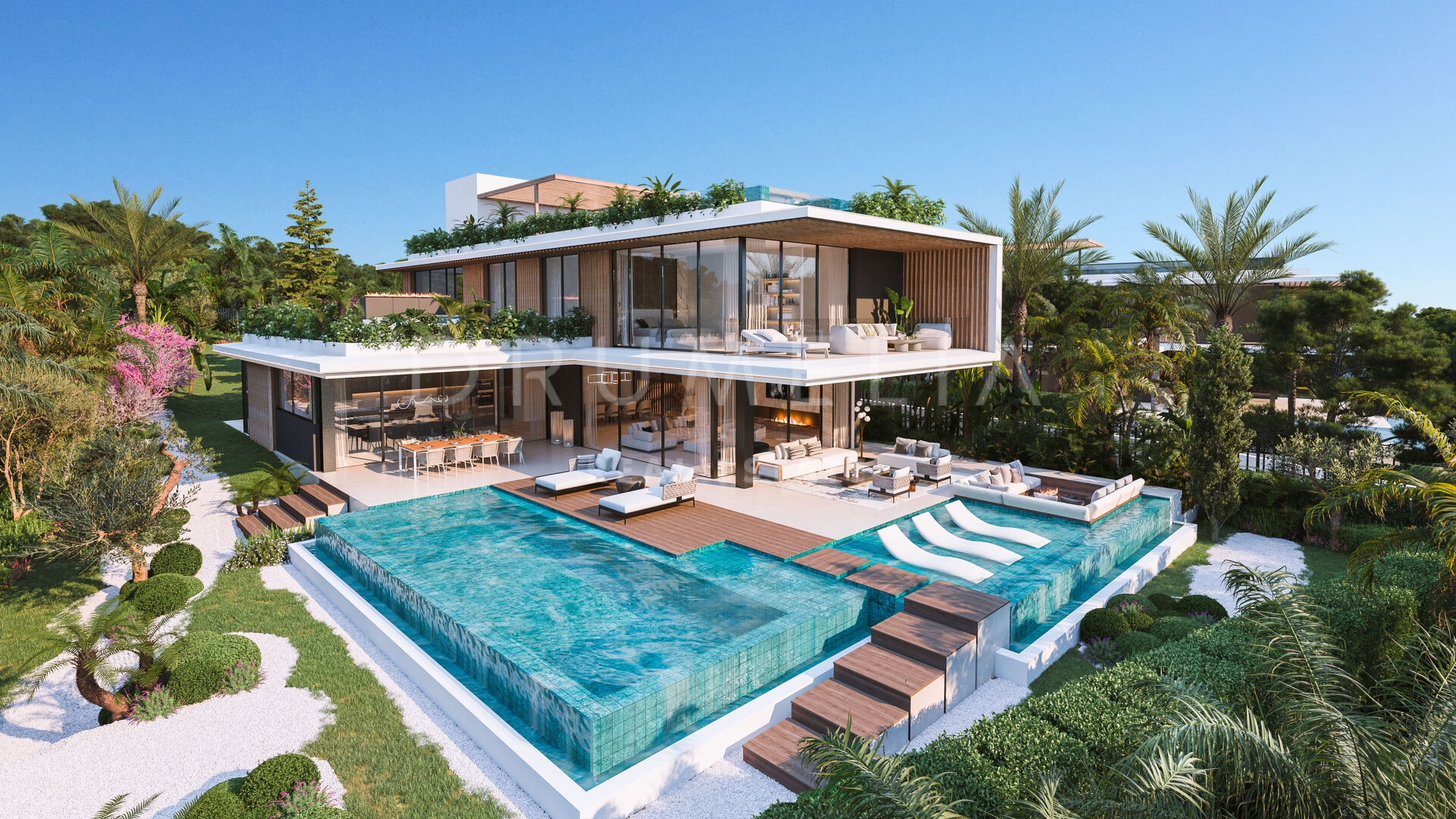
A local guide to the parts of Marbella, Estepona and Benahavís where you can walk to coffee, restaurants, groceries and the beach, whether you want to give up the car completely or simply use it far less.
Last reviewed: Sierpień 2026
The strongest genuinely car-free options are Marbella Centre & Old Town, San Pedro de Alcántara, Puerto Banús, Estepona Town and Benahavís Village.
For car-light living rather than completely car-free living, selected parts of the Golden Mile, Cortijo Blanco, Guadalmina Baja, Nueva Andalucía, La Campana, Aloha and Elviria can also work very well.
The important point is that these places are not interchangeable. Puerto Banús and San Pedro can both work without a car while offering completely different lives.
Our rule remains: Lifestyle → Location → Car.
Yes… but you need to choose the location much more carefully than someone who is happy to drive everywhere.
Marbella and the surrounding coast are spread out. Places that look close on a map can be separated by hills, major roads or enough distance to make everyday walking unrealistic.
For many residents, the better question isn’t whether they can eliminate the car completely. It’s whether they can live somewhere where coffee, groceries, the gym, restaurants and the beach don’t all require a drive
There are really three different versions of car-free living around Marbella.
1. You genuinely do not want to own a car. You need somewhere that covers most everyday needs on foot, with taxis, buses or occasional car hire filling the gaps.
2. You will own a car but do not want to use it every day. This opens up far more interesting options and is probably the sweet spot for many residents.
3. You simply want things nearby. You don’t mind driving, but you don’t want every coffee, supermarket visit or dinner to require it.
Understanding which of these you mean before viewing properties can save a considerable amount of time.
Best for: the most complete car-free Marbella lifestyle.
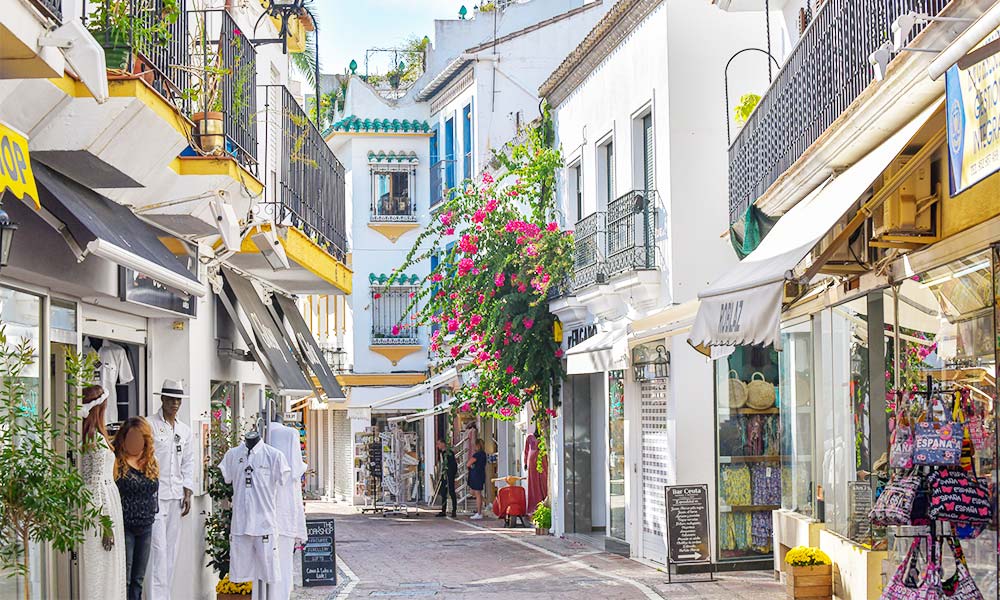
Central Marbella is one of the first places we would suggest to somebody who does not want to own a car. Supermarkets, pharmacies, shops, restaurants, cafés, gyms, healthcare, the beach and the promenade are all concentrated within a relatively compact area.
The Old Town adds pedestrian streets, plazas and a more traditional side of Marbella while keeping the modern centre and seafront close.
Our take: one of the strongest genuinely car-free options. If you do own a car, private parking becomes considerably more important.
Best for: families and practical year-round living.
San Pedro feels much more like a functioning year-round town than a resort. Supermarkets, schools, sports facilities, cafés, restaurants, shops, healthcare and everyday services are spread throughout the centre.
The boulevard provides a major public space through town, while the beach and long promenade sit further down towards the coast.
Our take: possibly the most practical car-light choice for year-round residents.
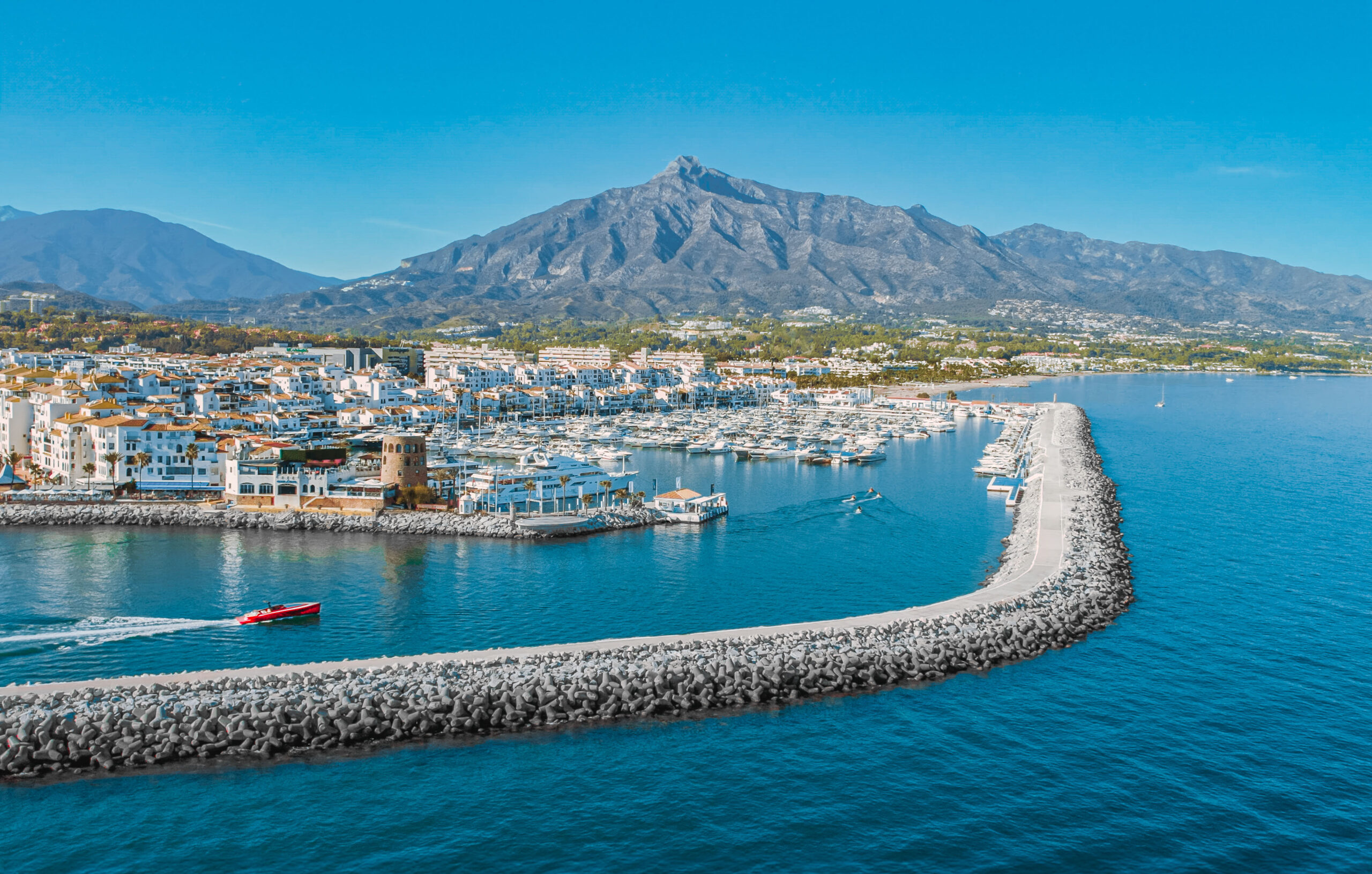
Best for: beach, restaurants, shopping and social life.
Within a relatively small radius you have restaurants, cafés, supermarkets, shopping, gyms, beaches, nightlife and the marina. If those are the things you want around you, the lifestyle is incredibly convenient.
The caveat is obvious: Puerto Banús can be busy, glamorous, noisy, expensive and intensely seasonal.
Our take: an excellent car-free option for the right person. Puerto Banús and San Pedro can both work without a car while offering almost opposite lifestyles.

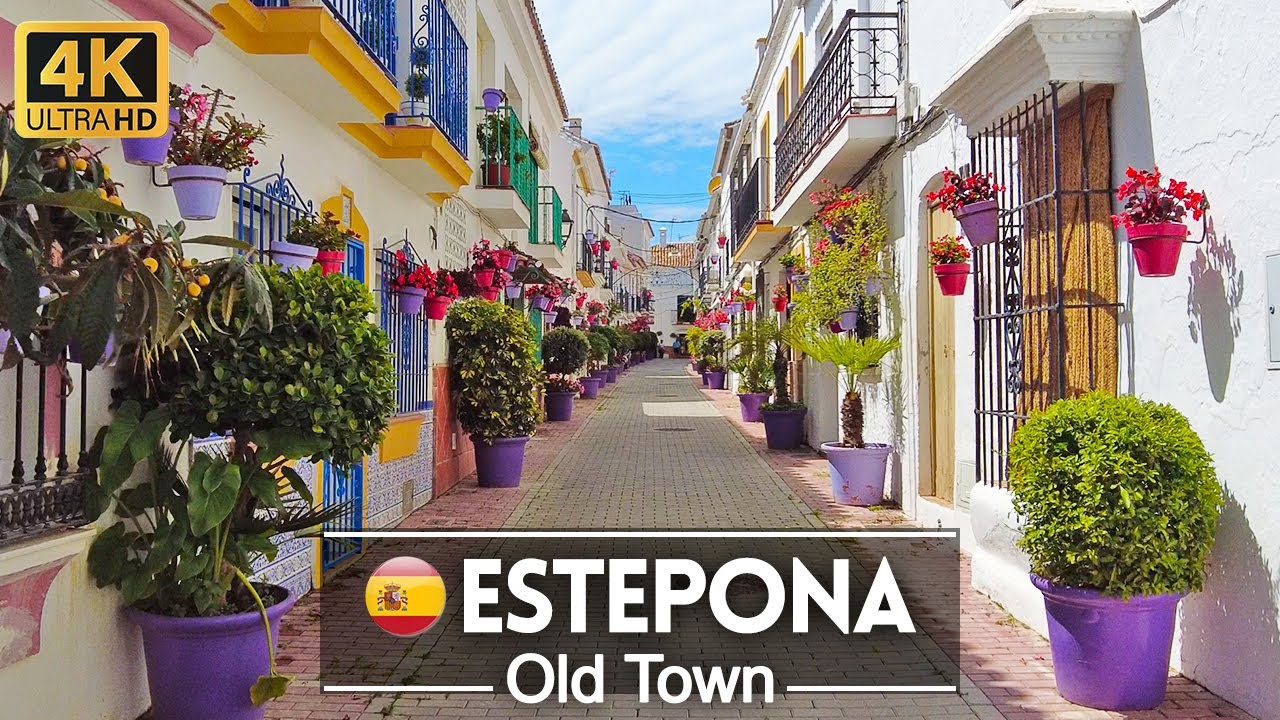
Best for: a walkable coastal town lifestyle.
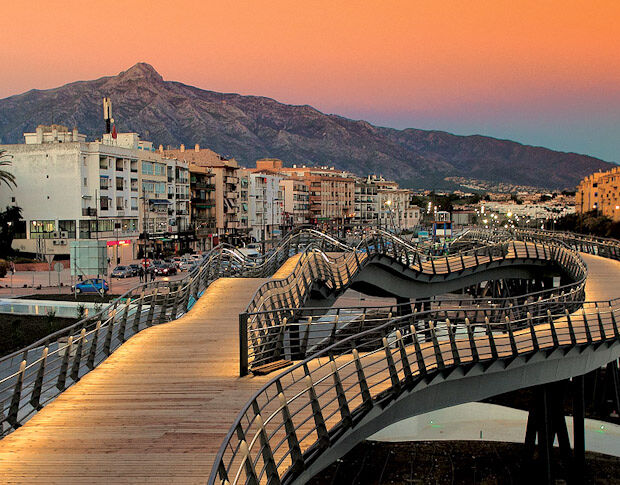
Estepona Town deserves to be high on any car-free shortlist. The Old Town, shops, restaurants, supermarkets, beach and promenade are concentrated within a manageable area and the town has a strong year-round local population.
The trade-off appears if much of your life happens further east around Marbella, Nueva Andalucía or San Pedro.
Our take: one of the best genuinely walkable places on this part of the Costa del Sol, especially if your everyday life is centred on Estepona itself.
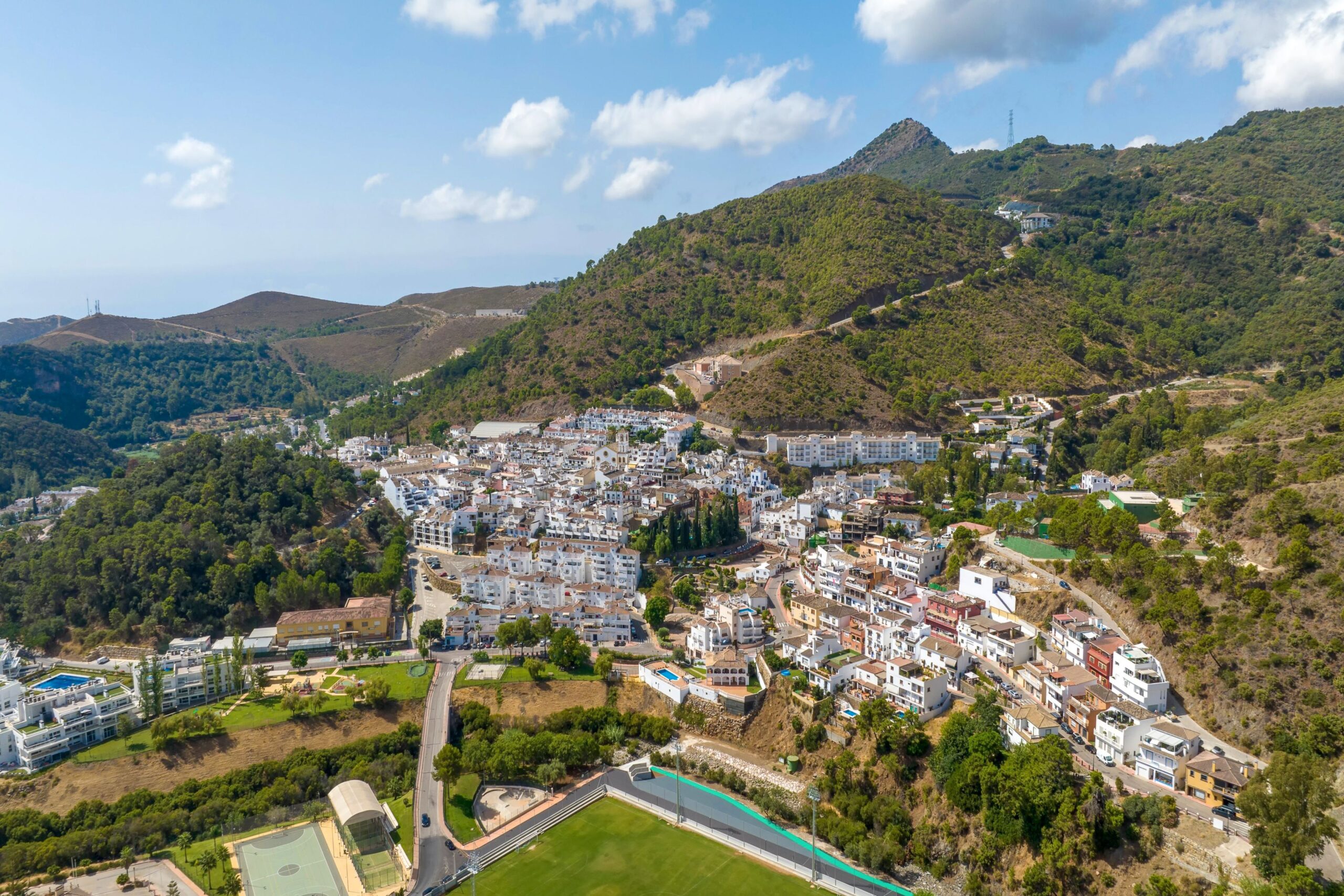
Best for: compact village life without daily driving.
Most people associate Benahavís municipality with hillside villas, golf courses and gated communities where a car is essential. Benahavís Village itself is different.
Restaurants, cafés and everyday amenities are concentrated within a compact area, with mountains and walking routes immediately around you.
The major caveat is that trips to the coast, Marbella, major shopping and many international schools will still require transport.
Our take: proof that a walkable lifestyle does not have to mean an urban one.
Best for: car-light living close to Marbella and Puerto Banús.
The Golden Mile is not one compact town centre, so your experience depends enormously on the exact property. Beachside sections can provide access to the promenade, restaurants, hotels, beach clubs and the ability to walk or cycle towards Marbella and Puerto Banús.
A bicycle changes the equation considerably here, and taxis are easy when you don’t want to walk.
Our take: excellent for affluent car-light living if you choose the micro-location carefully. Don’t buy the words “Golden Mile”. Buy the actual location.
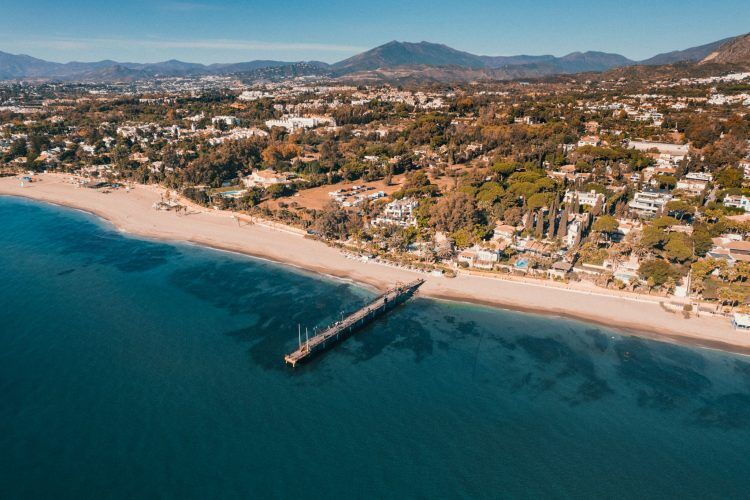
Best for: quiet beachside living between San Pedro and Banús.
Cortijo Blanco sits in an unusually useful position. Depending on exactly where you live, you can walk towards San Pedro for everyday services, use the beach and promenade, and head towards Puerto Banús when you want more restaurants and nightlife.
Our take: a very good option for someone who wants beachside residential life without feeling isolated.
Nueva Andalucía is huge. Some parts put restaurants, cafés, supermarkets, gyms and other services within an easy walk. Other parts place you on a hillside or inside a villa community where owning a car is effectively unavoidable.
La Campana deserves particular mention. It is more urban, local and practical. In some ways closer in character to San Pedro than to the polished golf-and-villa image associated with Nueva Andalucía.
Aloha can also create a very convenient local bubble around restaurants, cafés, supermarkets, gyms and golf. The caveat is that you may eventually want to leave that bubble and explore the rest of Marbella.
Our take: choose the street, not the postcode.
Best for: beachside residential living with San Pedro nearby.
Guadalmina Baja is low-rise, established and close to the beach, with restaurants and some everyday amenities accessible depending on the exact location. San Pedro nearby expands what is available.
The main coastal road and the exact side of it you are on materially change how practical walking feels.
Our take: better for owning a car but not wanting to use it constantly than trying to eliminate one completely.
Best for: Marbella East with amenities nearby.
Elviria has useful clusters of restaurants, supermarkets, cafés and services, while the beach is accessible from the coastal side of the area.
But Elviria covers a larger area than many first-time buyers appreciate. Properties inland and uphill become much more car-dependent, and crossing the A-7 changes the experience considerably.
Our take: physically walk the journeys you expect to make before buying.
Families need to add one major question to the walkability calculation: where is the school?
You can choose a property where restaurants, supermarkets, beach and cafés are all within walking distance and still end up making two car journeys every weekday because school is elsewhere.
Then add sports clubs, friends’ houses, after-school activities and what level of independence you want your children to have as they get older.
For families, car-light may be more realistic than completely car-free.
Retirement can make walkability considerably more important.
The obvious temptation is to choose a peaceful villa with beautiful views. That may be perfect at 60. Ask whether it will still be perfect at 70 or 80.
Being able to walk to restaurants, shops, the promenade, healthcare and friends can become increasingly valuable over time.
Marbella Centre, San Pedro and Estepona Town all deserve serious consideration for buyers thinking this far ahead.
This may actually be the most useful way to approach the whole question.
There is a big difference between needing a car and owning a car.
You might want one for airport runs, exploring Andalucía, golf or visiting friends elsewhere on the coast. That does not mean you want to drive every time you need milk.
For many buyers, we would aim for a location where roughly 80% of normal weekly life can happen without getting into the car.
Before buying a property because the listing says it is “walking distance to everything”, actually walk the routes you expect to use.
Home → supermarket
Home → morning coffee
Home → beach
Home → gym
Home → favourite restaurant area
Home → school, if relevant
Then ask: would I make this walk in Lipiec? Carrying shopping? At night? Is there pavement? Do I need to cross the A-7? Is the return uphill? Would I happily let older children walk it?
“800 metres away” tells you surprisingly little about whether somewhere feels walkable.
| If your priority is… | Start looking around… |
|---|---|
| Most complete car-free lifestyle | Marbella Centre or Estepona Town |
| Practical year-round family life | San Pedro |
| Restaurants, beach, shopping & nightlife | Puerto Banús |
| Quiet village life | Benahavís Village |
| Prestige without constant driving | Selected Golden Mile locations |
| Beachside residential life | Cortijo Blanco or Guadalmina Baja |
| Nueva Andalucía | Start with La Campana, Aloha and amenity-rich pockets |
| Marbella East | Look carefully at convenient parts of Elviria |
Yes, you can live in Marbella without a car.
But we would not begin the property search with a map of the most walkable neighbourhoods. We would begin with you.
Do you want the energy of Puerto Banús or the everyday practicality of San Pedro? Would you rather walk through Marbella Old Town or wake up in Benahavís Village? Is the beach part of your daily life? Where is your children’s school? How often will you actually go into Marbella?
The objective is not simply to find somewhere you can live without a car.
It is to find somewhere you want to live, where the car becomes optional rather than essential.
Yes. Marbella Centre, San Pedro and Puerto Banús are among the strongest options, while Estepona Town and Benahavís Village can also support highly walkable lifestyles depending on where the rest of your life happens.
Marbella Centre is one of the strongest all-round choices because shops, restaurants, supermarkets, healthcare, the beach and promenade are concentrated within a relatively compact area.
Yes. The marina, beaches, restaurants, shopping, nightlife, gyms and everyday amenities are concentrated within a small area, although its busy and seasonal character will not suit everyone.
In selected parts, potentially. La Campana and parts of Aloha have useful concentrations of amenities, while many other parts of Nueva Andalucía are much more car-dependent.
Yes. Central San Pedro has shops, supermarkets, cafés, restaurants, sports facilities and everyday services within walking distance, with the beach and promenade further towards the coast.
Parts of it are. Beachside locations can provide excellent access to the promenade and coast, while other Golden Mile properties further inland can be much more car-dependent.
Estepona Town and central Marbella are both highly walkable. The better choice depends on where the rest of your social, family and work life is based.
In most of Benahavís municipality, a car is very useful. Benahavís Village is the exception for everyday village life, although trips to the coast, schools and major shopping usually require transport.
Walkability is only one part of choosing where to live. Use the related guides to compare areas, understand the buying process and match the location to the life you actually want.